

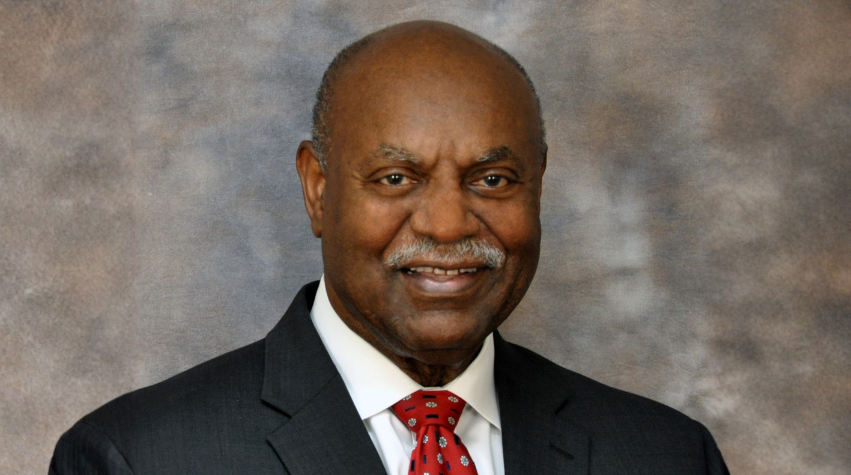
As Black History Month honors those who expanded opportunity in their time, we recognize leaders who continue to shape the profession today. Dr. Harold T. Conner Jr. made history in 1964 as the first Black cooperative engineering student in the University of Tennessee system and, in 1968, became its first Black chemical engineering graduate.
Over six decades, Conner has built a distinguished career in nuclear operations and a legacy of service to AIChE. In this interview, he reflects on breaking barriers, the progress he has witnessed in chemical engineering, and why leadership and service remain essential to building a lasting career.
You made history as the first Black cooperative engineering student in 1964 from the University of Tennessee Martin and the first Black chemical engineering graduate from the University of Tennessee Knoxville. Looking back, what did that milestone mean to you at the time, and how do you reflect on it today during Black History Month?
In 1968, becoming the first Black graduate in chemical engineering from the University of Tennessee, Knoxville, was both an honor and a profound responsibility. I knew I was stepping into uncharted territory and that my success would shape perceptions about who could excel in this field. I carried the weight of representation and the hopes of my family and community, who had fought hard to open that door for me. I had to prove that I belonged and that their sacrifices were worth it.
Today, during Black History Month, that achievement reminds me of both how far we've come and how much work remains. While I'm honored to have been first, my hope has always been that the path would widen for those who follow. Now, it means using that platform for mentorship and outreach, ensuring young people of color see themselves in STEM fields, and reminding the next generation that they belong in these spaces. History isn't just about what happened—it's about what we do with the opportunities that come from those moments.
You have been active in AIChE for more than five decades. How has your involvement in AIChE shaped your growth as a chemical engineer and leader?
My involvement in AIChE for more than five decades has been instrumental in shaping both my technical expertise and leadership philosophy. I believe in the leadership principles of Kouzes and Posner: challenging the status quo, inspiring a shared vision, enabling others to act, modeling the way, and encouraging the heart. AIChE provides a professional home where I can practice these leadership principles while staying current with evolving technologies, connecting with peers, and contributing to the field's advancement. The organization's emphasis on technical excellence and continuous learning guided my career across multiple Department of Energy sites and leadership roles in nuclear technology.
Being recognized as an AIChE Fellow in 2018, receiving the Management Award in 2022, and being elected to the AIChE Board of Directors in 2026 reinforced my commitment to give back to the organization that has given me so much. AIChE has been both a professional anchor and a catalyst for growth throughout my career.
Black History Month highlights how far the profession has come. From your perspective, what changes in chemical engineering make you most optimistic today compared to when you began your career?
Over my career, I've witnessed transformative changes in chemical engineering that give me genuine optimism, particularly regarding diversity and inclusion. When I started in 1968, I was often the only Black engineer in the room. Today, while we still have work to do, I see more intentional efforts to recruit, retain, and promote engineers from diverse backgrounds. Universities and companies now recognize that diversity isn't just about fairness—it's about innovation and excellence.
The evolution of mentorship and outreach programs has been particularly encouraging. Organizations like AIChE, the National Society of Black Engineers, the National Organization of Black Chemists and Chemical Engineers, and industry partnerships are actively creating pathways for underrepresented students to enter and thrive in chemical engineering. I've had the privilege of participating in these efforts and seeing young Black engineers succeed and lead.
Students today can connect with mentors, access resources, and see role models who look like them far more easily than my generation could. The field itself has expanded from traditional chemical processes to renewable energy, biotechnology, and environmental sustainability, creating diverse opportunities that attract diverse talent.
What makes me most optimistic is witnessing a cultural shift: the recognition that excellence in engineering requires all voices at the table.
As an AIChE Fellow and Board Member, what message would you like to share with today's chemical engineers about leadership, service, and building a lasting career?
My message to today's engineers about leadership and service is simple: technical excellence alone isn't enough. True leadership in engineering means using your skills to develop the people around you, solve real problems, involve everyone in finding solutions, and listen closely to others—because they often already know the answers.
Leadership isn't about titles or positions. It's about influence, impact, and vision. Whether you're early in your career or a seasoned professional, you have opportunities every day to lead by mentoring a colleague, coaching, and counseling. The best leaders I've known practiced accountability and responsibility, lifted others up, and understood that their success was measured not just by their own achievements, but by their team's success.
Service to the profession is equally vital. Organizations like AIChE thrive because engineers give their time, expertise, and passion to advance the field. Get involved—join committees, attend conferences, mentor students, and share your knowledge to pay it forward.
Read more stories in the series AIChE Observes Black History Month.