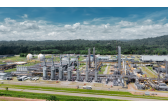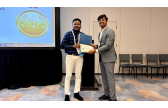
Got a great shot from the plant or lab? We want to publish it! Submit your photos of the chemical engineering world for a chance to win a cash prize. Enter today and show us the beauty of what you do.
This issue focuses on how organizations are closing the loop by pioneering biobased feedstocks and elevating the importance of recycling, waste reduction, and end-of-life management.
The National Academy of Engineering has announced its Class of 2026, including several standout AIChE members. Meet the chemical engineers earning one of the profession’s highest honors.
Innovation, safety, and the future of chemical engineering took center stage in Houston. Here’s what stood out at the 2026 AIChE Spring Meeting and GCPS.
CHS panel member Aaron Harris shares how his journey into hydrogen began and why collaboration remains at the core of advancing safety across the industry.
Adopting large language models (LLMs) for writing helps scientists boost their productivity, new research finds. But the smooth writing of an LLM may also obscure shoddy science.
Stay connected before, during, and after the 2026 AIChE Spring Meeting and GCPS. Follow along on social for live moments, photos, and conversations from Houston.
As gene editing and RNA technologies converge, AIChE’s Society for Biological Engineering is launching a new conference designed to bring them together. We spoke with the GEAR chairs about the vision behind the meeting and the conversations they hope it will spark in Boston.
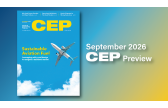
The latest issue of CEP covers green hydrogen and digital twins, rare earth element solvent extraction, and self-driving laboratories in the pharmaceutical industry.
Connect with chemical engineers, explore key topics, and turn ideas into impact at the 2026 AIChE Spring Meeting and 22nd GCPS in Houston, April 12–16.
In February, ChEnected observes Black History Month with posts about AIChE’s pioneers for equity and inclusion, as well as perspectives on the road ahead.
Winnette McIntosh Ambrose, a chemical engineer and National Institute of Health scientist specializing in vision research, shows the adaptability of her engineering degree by taking on both the lab and the kitchen.
With a bit of smoke, a few mirrors and a degree in hieroglyphics, anyone can learn to read a P&ID. Piping and instrumentation diagrams is a topic that can benefit process, project and design engineers, business developers, operators, safety, maintenance and even management.
Giving Back.
Donations small and large and make a difference, and remember all gifts
to the AIChE Foundation are tax-deductible.