
Process engineers drive innovation and efficiency in industries like petrochemicals, pharmaceuticals, food, and more. In this series, we spotlight the dedicated professionals who solve complex challenges and shape the future of these vital sectors. The Community of Process Engineers is AIChE's most active discussion group, connecting experts who make a real impact. Interested in being featured? Learn more and join the conversation at aiche.org/CPE.
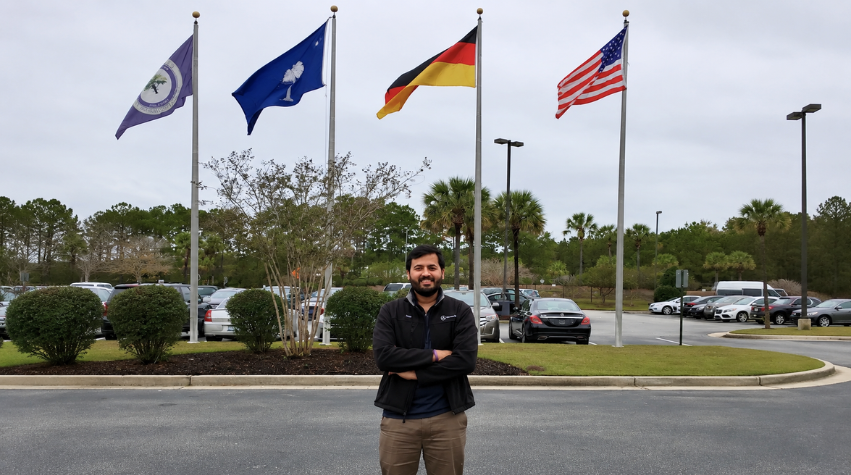
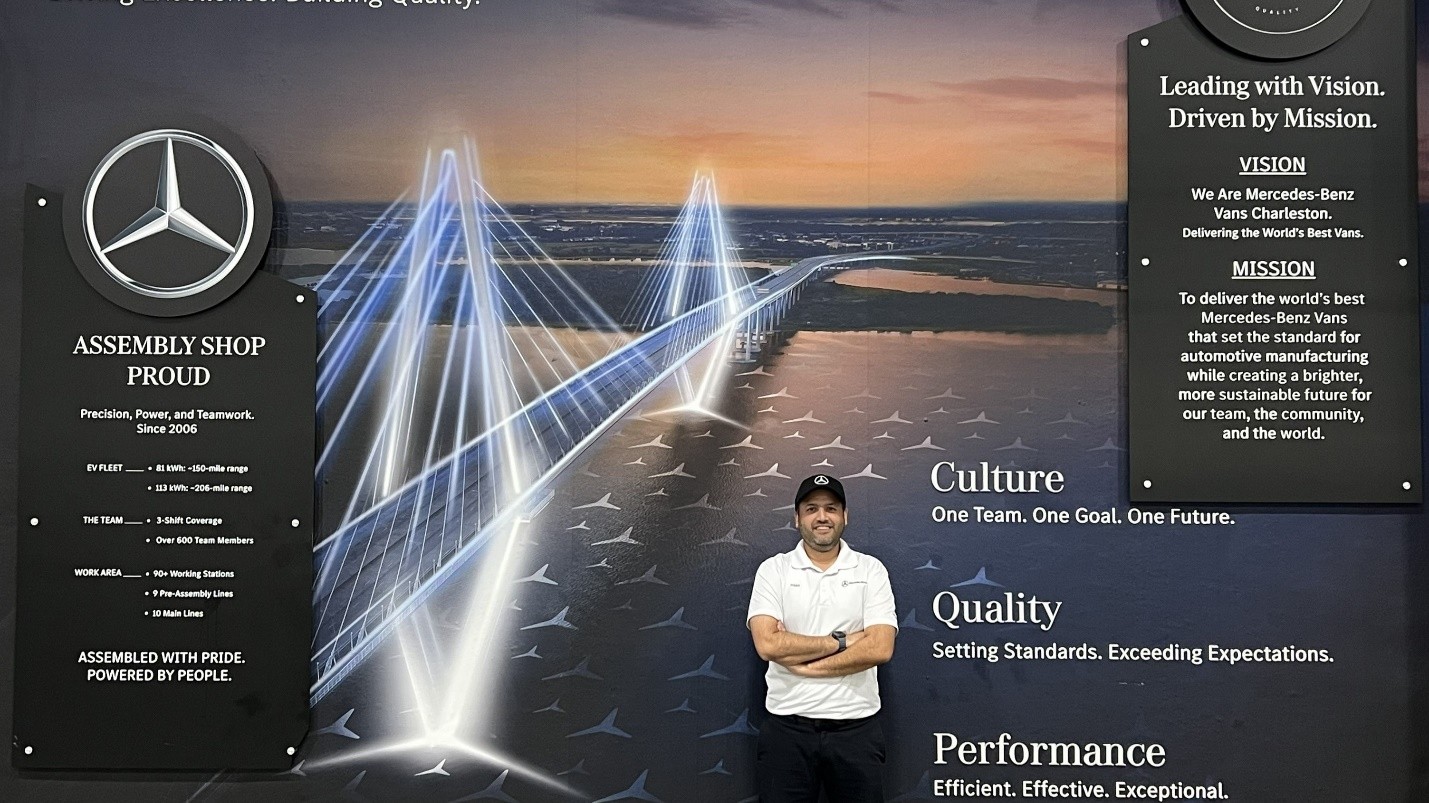
This month, we introduce Nikhil Sharma, an assembly engineer at Mercedes-Benz Vans LLC. He discusses his career path, the challenges he's overcome, and why his work matters.
Tell us a bit about your work as a process engineer.
I work as an assembly engineer in high-volume automotive assembly at Mercedes-Benz Vans in Charleston, South Carolina, where I support the Marriage and Chassis areas. I work closely with the production floor, so my work isn’t just about standards or data analysis, it’s about making sure the process works repeatedly under real production conditions. I support daily assembly operations, investigate recurring production and quality concerns, improve work methods, coordinate with production and quality teams, and help prepare the line for new product or process changes.
What I enjoy about this work is how practical it is. A process can look simple on paper, but the real test is whether it works consistently across shifts, different product variants, changing production conditions, and normal human variation. Small details in method, sequence, tooling, material availability, or training can affect the final outcome. I see process engineering as the discipline that connects people, equipment, materials, and information to create a system that performs reliably, not just once.
Why did you become a process engineer?
I've always been interested in how systems behave in the real world. My automotive engineering degree at Clemson taught me to see vehicles as complex systems, but manufacturing experience revealed something equally important: good design only creates value when you can build it repeatedly, safely, and with quality. That realization pulled me toward process engineering because that's where engineering intent meets production reality.
My perspective has evolved over time. Early in my career, I focused on fixing visible problems. Now I'm more interested in the structure behind them: why they occurred, why we didn't catch them earlier, and what standards could prevent recurrence. That shift from "firefighting" to prevention has made process engineering meaningful to me.
What are some of the biggest challenges you face in your role as a process engineer?
The biggest challenge is that manufacturing problems rarely remain isolated. A quality issue might actually have roots in work methods, supplier variation, training, or team communications. Investigation often reveals that a seemingly simple issue is the result of several converging factors.
Another challenge is balancing immediate containment with long-term process improvement. Production teams need quick solutions to keep operations moving safely, but stopping at containment means the issue returns. A process engineer has to help shift thinking from "How do we get through today?" to "How do we strengthen the process for tomorrow?".
Communication is also a major part of the challenge. Process engineers work with production, quality, maintenance, logistics, planning, launch teams, and leadership. Because each group may see the issue through a different lens, the engineer’s job is to translate those views into a clear problem statement, align the team around facts, and help move the organization toward practical actions. This cross-functional coordination is sometimes just as important as the technical analysis.
How is your work as a process engineer critical to your particular job assignment or industry?
Process engineering is critical because vehicles are built through many connected operations, and each must be repeatable, safe, and quality-focused. Process engineers work to eliminate small variations in work method, material condition, tooling, or information flow that can create downstream effects.
This is especially important during launch and ramp-up. Supporting new product introduction, including electric vehicle production in North America, I saw how important readiness was. During ramp-up, the product, process, training, material flow, and quality checks all have to mature quickly while production continues moving. The challenge is not only whether a process can work once, but whether it can work repeatedly under real production conditions.
The process engineering adds value by thinking beyond one station or one metric and understanding how the full system behaves. Good process engineering helps convert complexity into stable execution to support the people doing the work, protect the customer experience, and help the organization improve without relying only on "firefighting."
What do you think is most important about what you do as a process engineer?
The most important part of my work is helping create stable systems that people can trust. In manufacturing, stability doesn't happen automatically. It comes from clear standards, disciplined problem solving, effective training, good feedback loops, and continuous learning from real production conditions. A strong process can't depend on one experienced person knowing what to do. The objective is to help the whole team perform consistently.
I also believe process engineers play an important role in connecting technology with human judgment. Manufacturing is becoming more digital, data-driven, and automated, but data alone doesn't improve the process. Someone still must understand the context, ask the right questions, separate symptoms from causes, and design a response that works on the floor. That's where engineering judgment matters.
For me, the most rewarding moments are when a complex issue becomes simple for the team because the process has been clarified, improved, or stabilized. When operators have a better method, quality teams have a clearer standard, and production leaders have fewer recurring issues, that's real process improvement. The goal isn't just to solve one problem. The goal is to build a system that keeps learning.
Connect with Nikhil on AIChE Engage
Join the Community of Process Engineers