
Chemical engineering is evolving rapidly, and the challenges facing the profession are more interconnected than ever. AI, sustainability, shifting supply chains, and emerging technologies are reshaping how engineers work and where they can make the biggest impact.
At the 2026 AIChE Annual Meeting, a featured session—ChemE at a Crossroad: Evolving a Timeless Profession for Impact in a Changing World—will bring together leaders from industry and research to explore the trends reshaping the profession and the opportunities they create for chemical engineers.
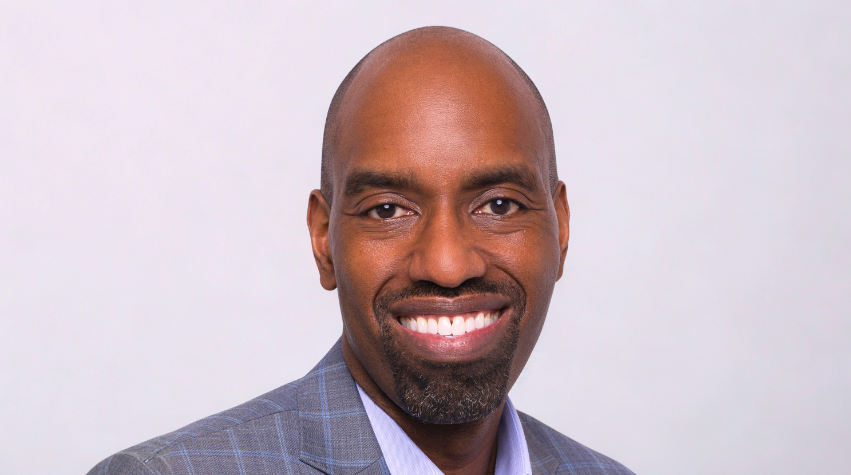
We spoke with Annual Meeting Program Co-Chair Cordell Hardy, Vice President and Chief Technology Officer at Cargill, about why this conversation matters now, what attendees can expect from the panel, and the questions he hopes will spark dialogue long after the session ends.
Chemical engineers have adapted to major shifts throughout the profession's history. What makes this moment different?
Chemical engineers have always tackled complex challenges, but today those challenges are more connected than ever. Food security, climate, supply chains, consumer expectations, and emerging technologies all affect one another, which means engineers can no longer solve problems in isolation.
What makes this moment different is both the speed and scope of change. Chemical engineers are increasingly working across data science, biology, materials science, sustainability, and global supply chains, while AI and digital tools are changing how quickly ideas can be tested, improved, and scaled.
The opportunity is not simply to adopt new technology. It is to use science and engineering to build systems that are more resilient, efficient, and responsive to societal and customer needs. That will require deeper collaboration across disciplines, industries, and regions.
At Cargill, we see innovation as a way to help nourish the world safely, responsibly, and sustainably while creating value for customers and society.
Kim Chaffin, Brian Davison, Florian Schattenmann, and John Banovetz bring perspectives from across the profession. What do you hope their experiences will add to the conversation?
What excites me most is the range of perspectives represented on the panel. Kim Chaffin brings experience leading technology and innovation in highly technical manufacturing environments, with a strong understanding of what it takes to create impact at industrial scale. Brian Davison offers a valuable perspective on connecting fundamental science and biotechnology with commercialization, showing how breakthrough research can become practical solutions.
Florian Schattenmann and John Banovetz bring extensive experience leading innovation across global organizations. Their perspectives can help shed light on how companies build strong innovation capabilities, respond to complex challenges, and turn scientific discovery into products and technologies that create value.
Together, the panelists reflect the many ways chemical engineers contribute across industries. I think their experiences will reinforce that problem solving, systems thinking, innovation, and leadership remain essential to the profession’s future.
What questions or ideas do you hope attendees will continue discussing after the session?
I hope attendees continue thinking about how we prepare the next generation of engineers for a world where AI and digital tools are part of everyday engineering practice. As these technologies become more embedded in our work, we also need to consider which uniquely human capabilities will set successful engineers apart.
I’d also like the conversation to continue around how we accelerate innovation while ensuring solutions are practical, scalable, and create measurable value. Just as important is the question of what stronger partnerships across industry, academia, and government are needed to address increasingly complex global challenges.
Finally, we need to keep showing talented students the difference chemical engineers can make in areas such as food security, sustainability, advanced manufacturing, and everyday life. I hope attendees leave thinking not only about what is technically possible, but also about how engineers can work together to create lasting value for society.
Learn more and register for the 2026 AIChE Annual Meeting
Join the conversation on LinkedIn and Twitter | #AIChEAnnual