

Klaus Schwab, the founder of the World Economic Forum, has a knack for making headlines. From “the Great Reset Agenda” to “You’ll own nothing and be happy,” when Schwab introduces a new ominous catchphrase, it sticks. It’s no surprise that the title of his 2017 book, The Fourth Industrial Revolution, has become common vernacular for artificial intelligence (AI) optimists.
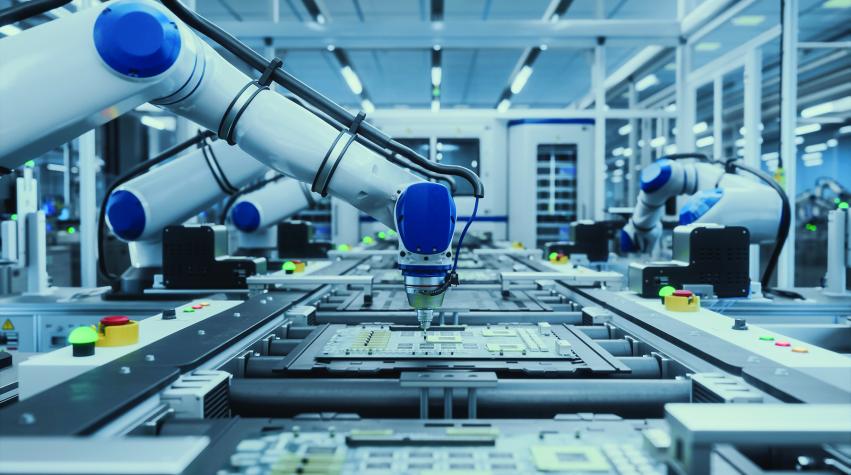
Schwab describes an industrial landscape transformed by the complete integration of AI, the industrial internet of things (IoT), and machine learning (ML). Prognostications of what the fourth industrial revolution, also called Industry 4.0, will actually look like vary widely, from modest technological advancements to Schwab’s techno-utopian vision. However, the effects of Industry 4.0 are already evident in the impact that AI/ML are having on process manufacturing. Applications vary from integration into existing technologies — like predictive maintenance capabilities — to large-scale, process-plant-encompassing AI assistance, process control, and data analytics software, capable of extracting insights from massive datasets. To AI proponents, these technologies are the first building blocks toward this new industrial revolution.
The reality of AI adoption
Today, these aspirations are colliding with statistics about AI pilot program failure rates. While high AI pilot churn is often framed as healthy experimentation, one study showing that 42% of pilot programs were later discontinued (1) highlights how unmet expectations of easy integration and rapid returns on investment (ROIs) are complicating AI adoption.
A 2025 MIT study found that 95% of companies currently undertaking genAI pilot programs have not yet yielded any measurable business impact (2). While this study included every type of genAI pilot, not just those in process industries, a common cause of failure across sectors was rooted in human nature. Workers found that the technologies were difficult to integrate, inflexible across processes, and misleading when compared to the frictionless adoption promised in demos. Only the 5% of companies that accounted for worker pushback — reconstructing their workflows rather than layering tools on top — generated significant returns. Assuring manufacturers that workflow friction is part of the process might sound discordant after promises of turnkey solutions and plug-and-play capability.
Manufacturers using these technologies to generate significant returns are doing so through slow, thoughtful, and flexible implementation. AI is frequently sold as a drop-in solution when it often requires extensive trial-and-error, and this mismatch is driving abandonment, locking out small and mid-sized manufacturers (SMMs), and inflating expectations.
The cost of entry
With some enterprise-scale deployments costing upwards of a million dollars — before integration, training, or downtime — manufacturers are often forced to choose between AI pilots and proven capital investments like new equipment or capacity expansion. Upfront cost remains one of the most cited barriers to adoption. Large manufacturers might not think twice about this price tag, but the high cost puts SMMs at a disadvantage. This constricted customer pool could be an issue for tech firms aiming to bolster claims of complete industrial revolution. However, the divide could widen gulfs within industries as well.
Waiting for ROI
Many AI technologies require experienced personnel, newer infrastructure and data systems, and time for trial-and-error. While larger companies might have the resources to devote to slow-and-steady integration, smaller manufacturers with tighter margins likely do not. SMM’s ROI for AI investment typically takes anywhere from six months to multiple years to emerge, and it can require significant data preparation, workflow redesign, and organizational change. While such flexibility can pay off for firms able to sustain it, it is a heavy lift for businesses already taking a financial risk on unfamiliar technology. Because large companies are more able to absorb upfront costs, retain experienced teams, and wait for long-term ROI, SMMs run the risk of being left behind.
Is “good” good enough?
Markets routinely overestimate the speed of transformation while underestimating the cost of getting there. Take, for instance, the dot-com crash. Although pets.com was not the only online platform operating a flawed business model, they became the symbol of the dot-com boom-and-bust cycle. The website raised millions in investment capital, all while selling dog food at a loss. However, the lesson is not that online shopping is unviable. The lesson is that prioritizing rapid growth over profitability is unsustainable. Today, consumer AI products like chatbots are ubiquitous, useful, and increasingly reliable, but the websites of the dot-com bubble demonstrated that these three characteristics do not necessarily guarantee long-term viability.
Current market conditions demonstrate many parallels to past bubbles. In January 2026, the S&P 500 and the Dow Jones Industrial Average both hit all-time highs, with seven out of the ten largest companies by market capitalization being tech firms betting on AI’s success. Industrial AI is not immune to this enthusiasm, and investors can quickly flip from optimism to demanding a clear pathway toward ROI during economic downturns. The success of these companies might be dependent on vendors’ ability to present their tools as practical, incremental, and worth the wait.
- S&P Global, “Generative AI Experiences Rapid Adoption, but with Mixed Outcomes – Highlights from VotE: AI & Machine Learning,” S&P Global, New York, NY (May 30, 2025).
- Snyder, J., “MIT Finds 95% Of GenAI Pilots Fail Because Companies Avoid Friction,” Forbes, Jersey City, NJ (Aug. 26, 2025).
This article originally appeared in the Emerging Voices column in the March 2026 issue of CEP. Members have access online to complete issues, including a vast, searchable archive of back-issues found at www.aiche.org/cep. Learn more about AIChE membership.