


In the world of chemical engineering, gel nail polish is often dismissed as a frivolous indulgence. However, beneath the glossy finish lies a complex matrix of ultraviolet (UV)-curable polymers and acrylates that require rigorous research and development (R&D) to perform correctly. For Julie Cushen, founder of Lilaque, the intersection of high-performance material science and beauty represents both a business endeavor and an opportunity to advance sustainability in the beauty industry. As a chemical engineer-turned-entrepreneur, Cushen spent years bridging the gap between advanced polymer research and accessible consumer products, proving that green chemistry can deliver performance without compromise.
Early inspiration and education
Originally from Winchester, VA, Cushen’s love for science was ignited by her high school chemistry teacher. This passion led her to Virginia Tech where she pursued a double bachelor’s degree in chemistry and chemical engineering, complemented with minors in French and microelectronics. “I knew that I wanted to be a chemistry-heavy chemical engineer,” recounts Cushen, “so it made sense to double major.” She continued on to pursue her PhD in chemical engineering at the University of Texas at Austin, researching polymer materials and advanced lithography.
Entrepreneurial shift
This foundation set the stage for her early career as she began working at Western Digital. After a few years, she joined a 3D printing start-up company in Silicon Valley where she got her feet wet in UV-curable formulations. “I sort of did a technical career transition into that aspect of materials formulation,” recalls Cushen, noting her subsequent roles in various start-ups that focused on these formulations. She eventually landed with a start-up in the nail polish industry that was developing automated manicures; that company unfortunately ran out of funding during the pandemic. Working as part of so many start-ups, Cushen was “bit by the entrepreneurial bug,” as she describes it.
“I had all this expertise in formulating nail products, and that’s when I decided to start my own company,” she says. She founded Lilaque in 2021.
Innovating with plant-based materials
The core innovation of Lilaque lies in its soy-based gel formulation. Traditional gel polishes rely heavily on petrochemical-derived ingredients. Cushen’s goal was to disrupt this norm and focus on circularity and renewable feedstocks. To achieve this, she chose acrylated vegetable oils as a starting point for her formula. These commercially available ingredients offered great material properties without sacrificing product performance and would resonate with customers who could identify plant-based components such as soybeans in the ingredient list.
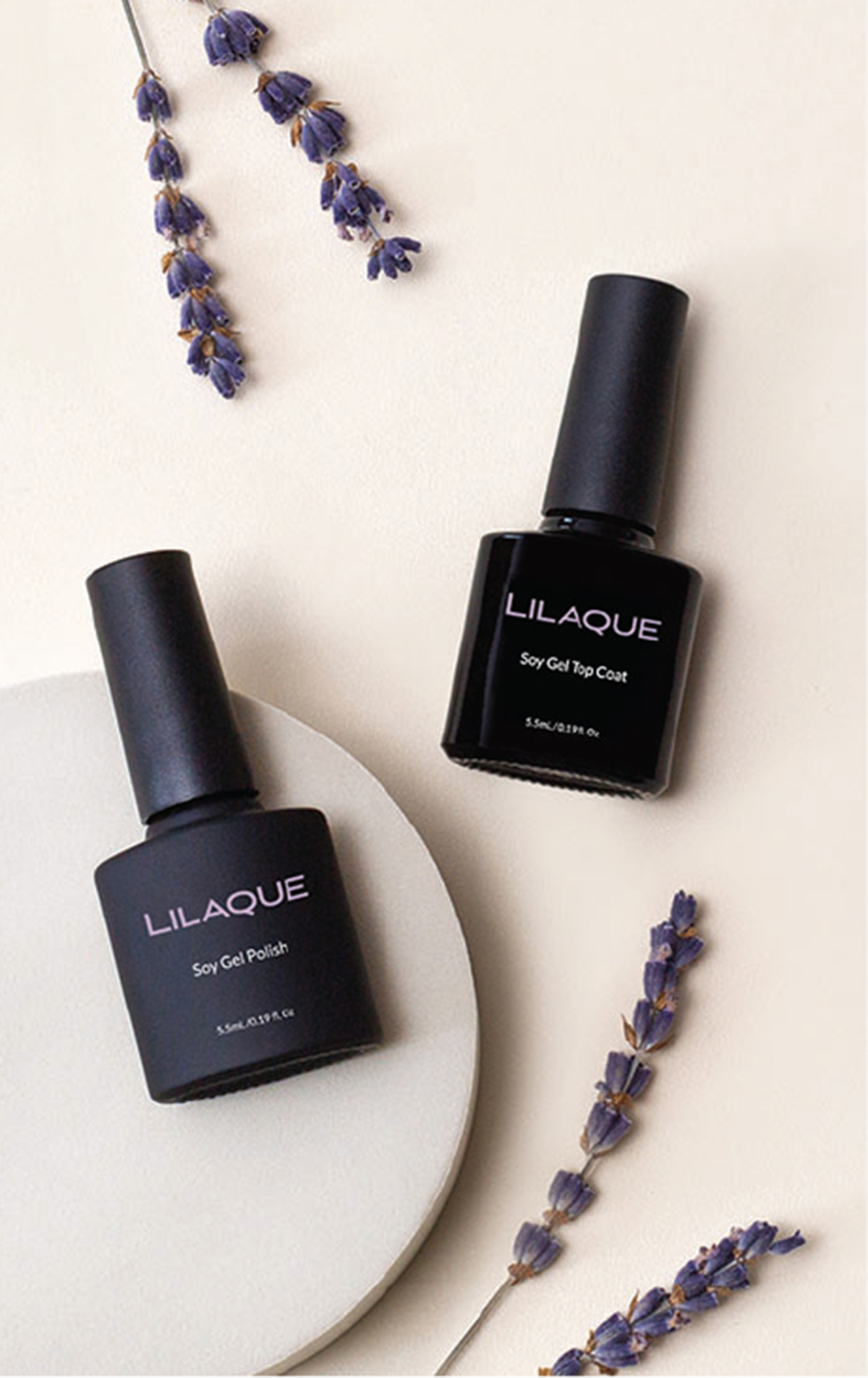
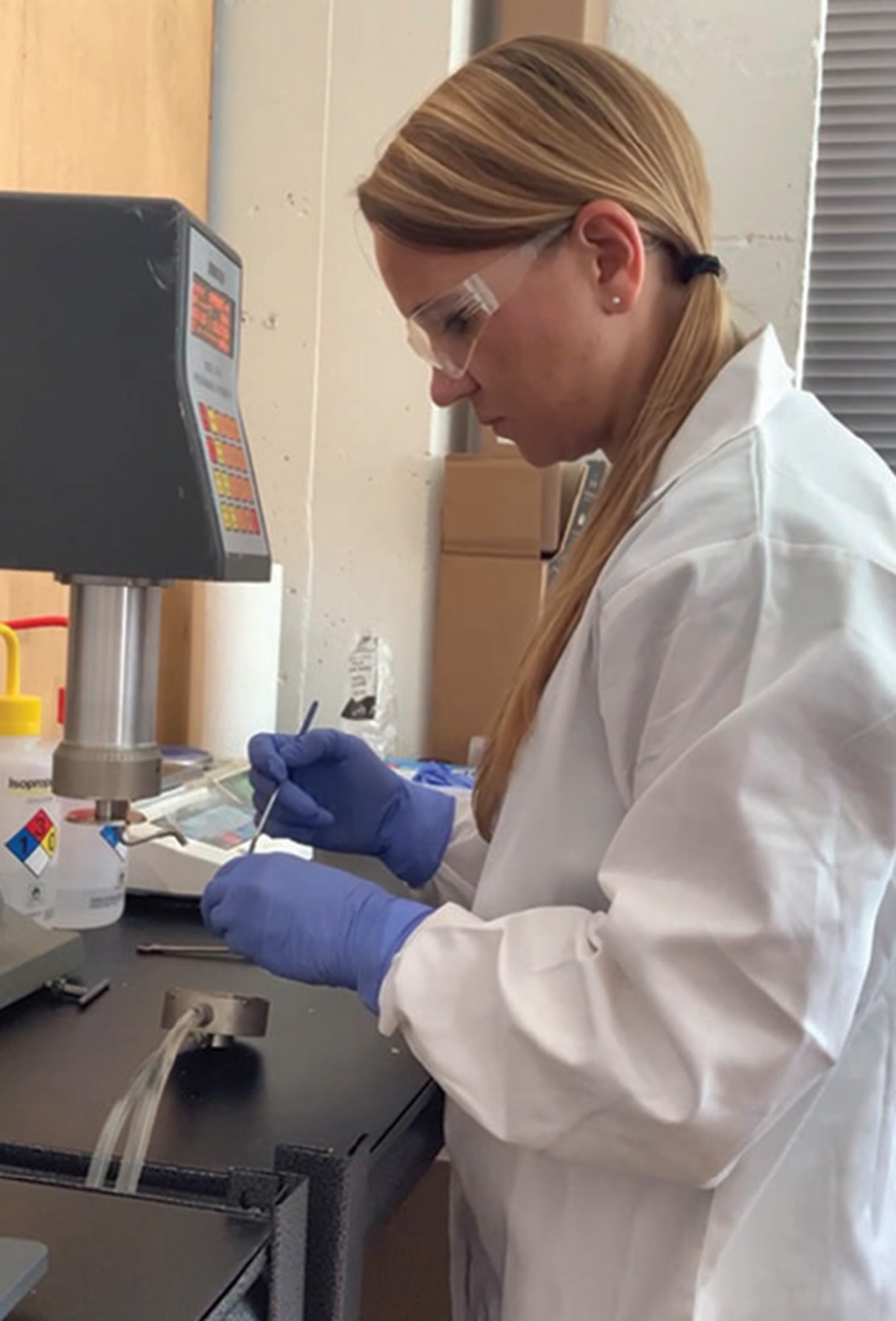
However, swapping petrochemicals with acrylated vegetable oils presented a challenge: lack of adhesion to the nail. To overcome this, Cushen engaged in a long development process, going through 300 to 400 different formulations over about a year and a half before landing on a product that performed well. “Testing was a huge part of product development,” notes Cushen, mentioning how she did a lot of comparison testing, as well as testing on her own nails and a group of product testers. She also obtained a nail technician license to not only understand the artistry, but also the technical requirements of application.
Aside from their sustainability, a key benefit of using plant-based materials is their low odor. Traditional gel polishes have a very strong smell right out of the bottle. “It really irritates some people,” says Cushen. “I know I get migraine headaches just from the smell.”
As of now, Lilaque gel polishes focus on the user experience beyond just scent, offering a two-step system (combining base and color in addition to a top coat) for at-home use compared to the traditional three-coat salon system. While currently optimized for at-home use, Cushen plans to expand beyond the DIY market and into the salon environment with a full three-step system after further R&D.
A more sustainable future
By prioritizing renewable resources and rigorous testing, she is proving that the future of beauty lies not just in aesthetics, but in chemistry. “If we can make these products a little bit more sustainable, we should do that,” emphasizes Cushen.
For Julie Cushen, the polish on our nails is merely the surface; underneath lies a deep commitment to engineering a cleaner and safer world.
This article originally appeared in the Profile column in the April 2026 issue of CEP. Members have access online to complete issues, including a vast, searchable archive of back-issues found at www.aiche.org/cep. Learn more about AIChE membership.