
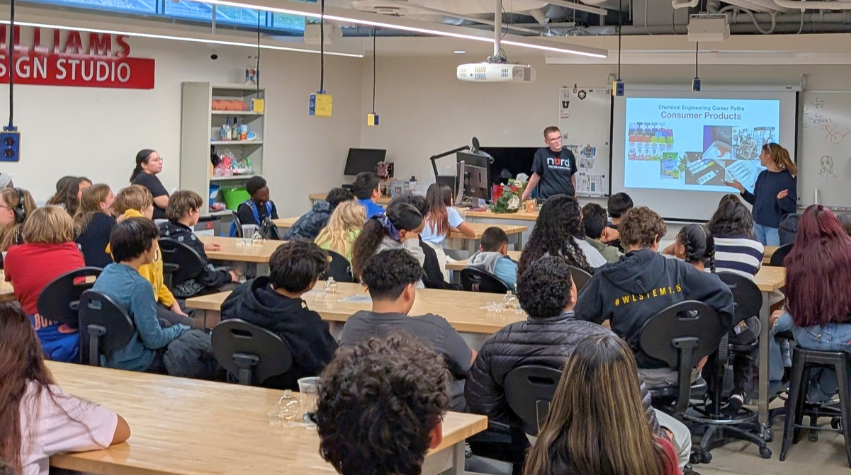
During Volunteer Month, AIChE is highlighting the students and members making a difference through service. From mentoring to classroom outreach, these efforts introduce younger students to chemical engineering in hands-on, memorable ways that spark early interest in STEM.
To expand the reach of this work, AIChE Fellows are helping bring the K–12 STEM Ambassador Program to more students through the Fellows Endowment. Their support strengthens initiatives like Bee a ChemE and creates more opportunities for early engagement in STEM.
An example of this impact can be seen at the University of Utah. For outreach student president Colin Schermerhorn, volunteering has been a defining part of his experience. In this interview, he shares how his chapter prepares for K–12 engagement, what resonates most with students, and how these experiences have shaped his own path in chemical engineering.
Can you share a memorable moment from your K–12 module sessions that had a significant impact on the students?
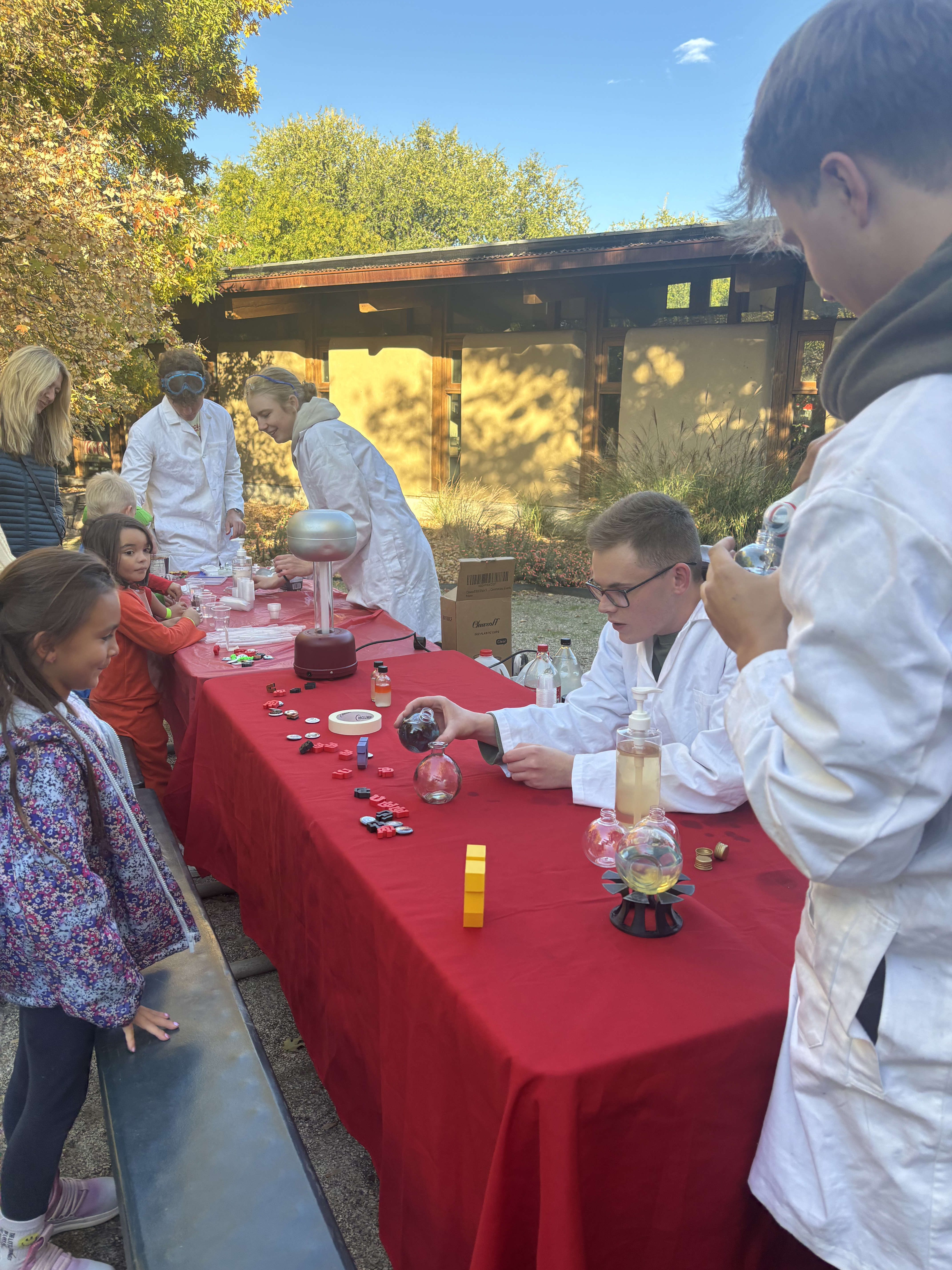
One of the most memorable moments from our K–12 outreach came during a middle school visit where we ran our wind turbine module. Students were challenged to design the most powerful and efficient turbine, and it was incredible to watch how quickly they became invested in the process. Many would test their designs and immediately return to their desks to refine and improve them.
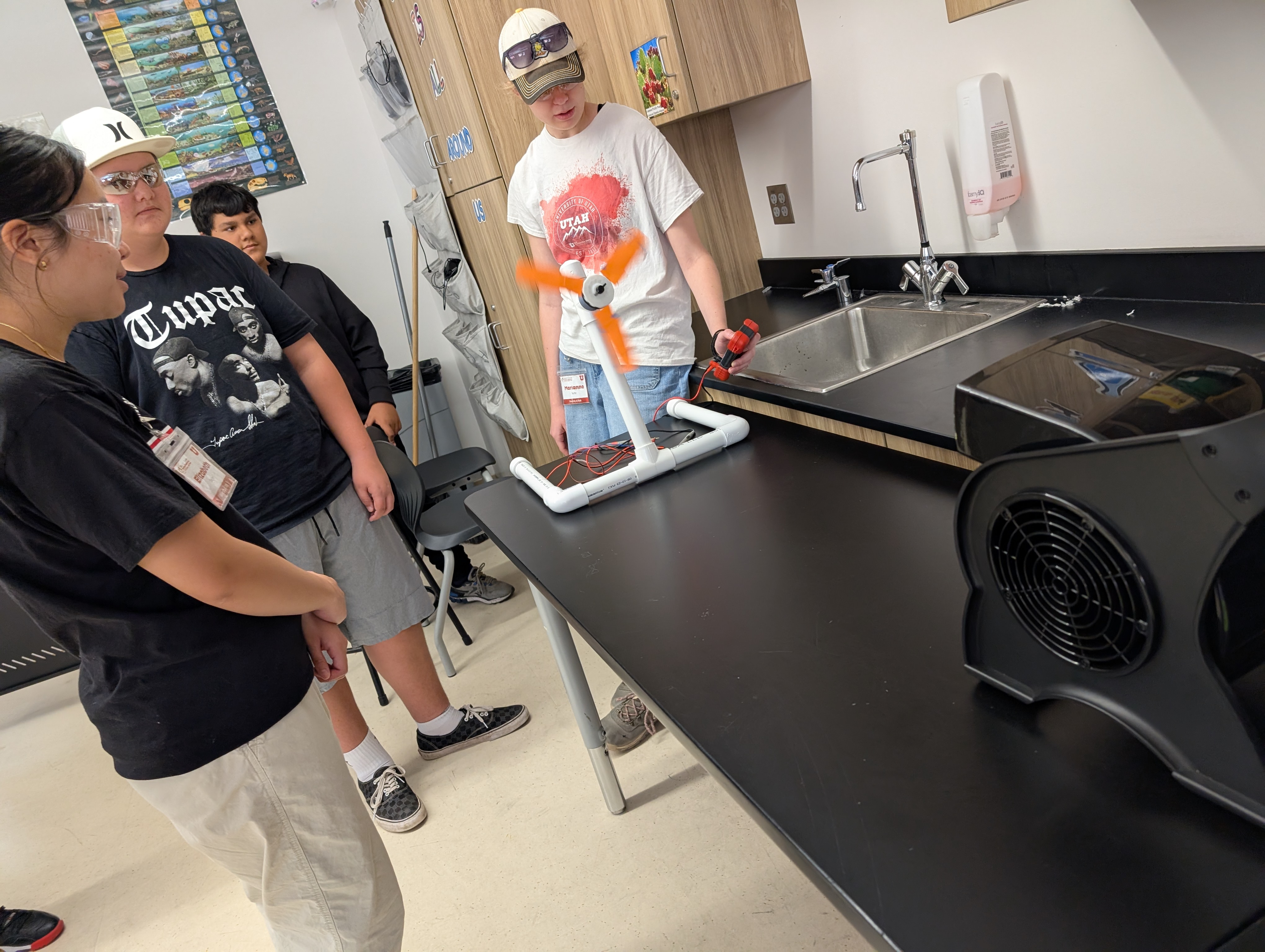
Seeing that level of creativity and persistence, especially the excitement around making something better with each iteration, really showed me how powerful hands-on learning can be. It turned the classroom into an environment where curiosity and problem-solving felt natural and exciting.
How did your student chapter prepare to effectively deliver these modules to younger students, and what skills or strategies have proven most effective?
To prepare for these sessions, our student chapter focused on both the technical content and how we delivered it. One unique part of our approach was reconnecting with our own middle school and high school teachers and coordinating visits to their classrooms. That made the experience more meaningful for us and gave us better insight into how to connect with students in those environments.
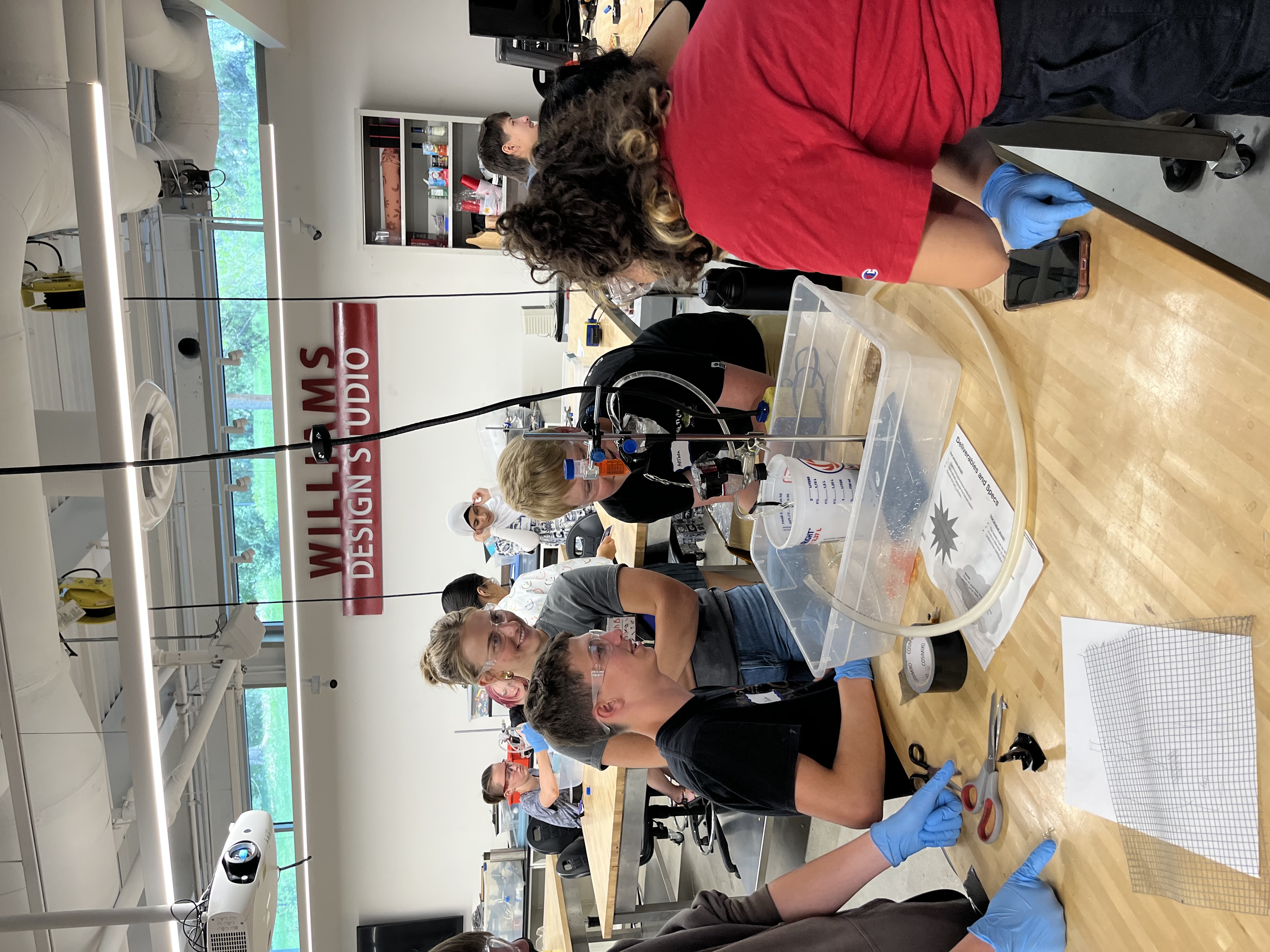
We also dedicated time during club meetings to walk through each module together, practice our presentations, and think through ways to keep students engaged. Over time, we’ve found that designing modules around innovation or friendly competition is one of the most effective ways to capture attention and sustain involvement. When students feel like they’re part of a challenge or building toward something, their engagement naturally increases.
What kind of response did you receive from K–12 students and educators about the modules, and how has this influenced your own career path as a chemical engineer?
The response from both students and teachers has been overwhelmingly positive. Students often light up with curiosity and excitement, and it’s incredibly rewarding to watch them begin to connect these activities to real engineering concepts. Teachers have been supportive and genuinely appreciative of the opportunity to introduce their students to a field many might not otherwise consider.
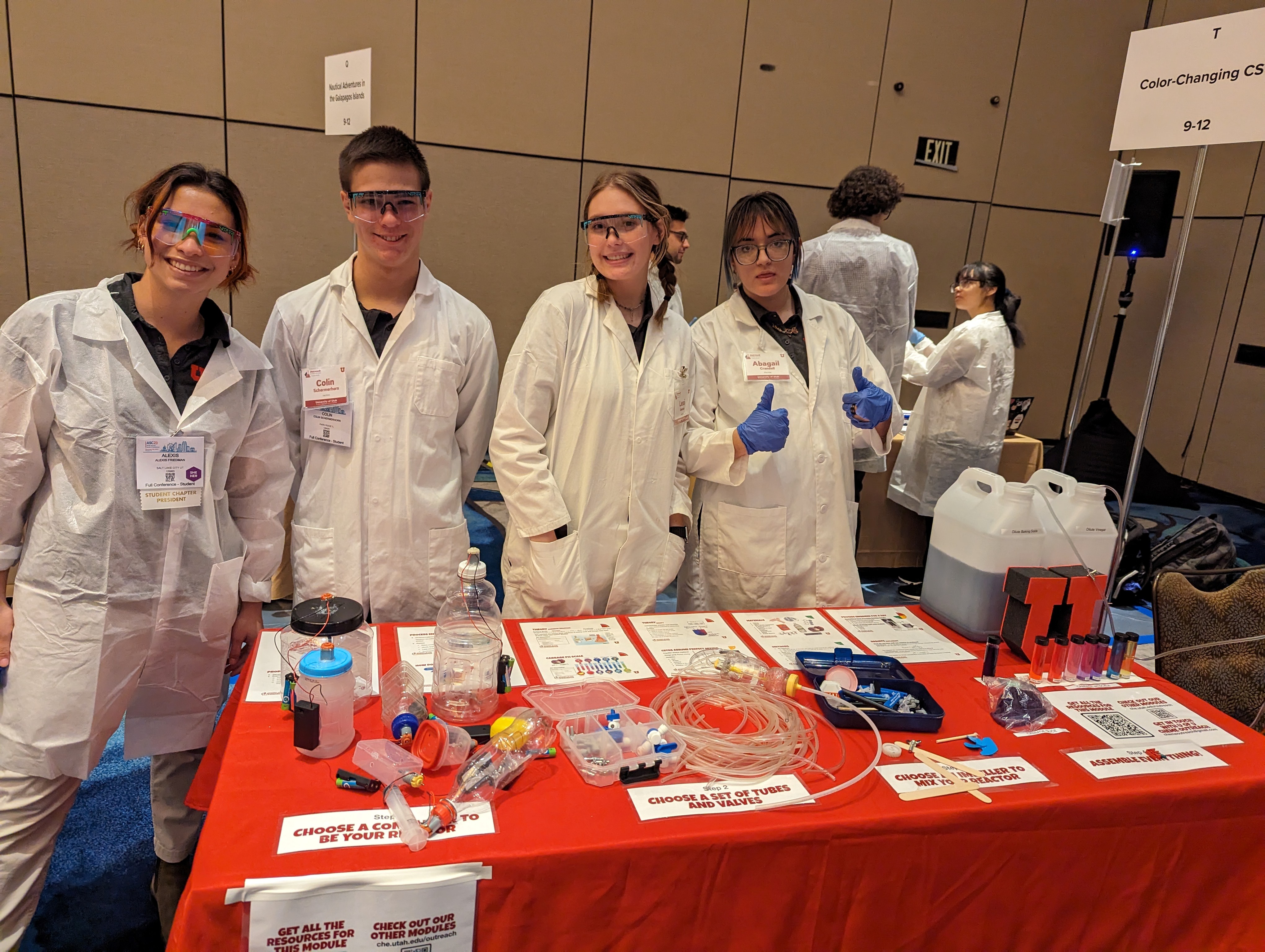
On a personal level, this experience has significantly strengthened my confidence as a speaker and presenter. It has also broadened my perspective on what a career in chemical engineering can look like. I’ve developed a stronger interest in roles that involve leadership, communication, and working directly with people, areas I hadn’t previously considered as central to my path.
Ready to make an impact? Get involved with AIChE.
Explore the Bee a ChemE K-12 STEM Ambassador Program.
Thank you to the AIChE Fellows, whose support through the Fellows Endowment is expanding the K–12 STEM Ambassador Program at the University of Utah and bringing Bee a ChemE to more students.