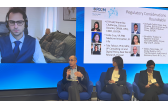


Pictured above from left to right: Dr. Jessica Morris, Rima Lahiri
Process safety continues to evolve as new technologies, emerging risks, and shared lessons shape how organizations protect people, assets, and the environment. At the center of these conversations is the Global Congress on Process Safety (GCPS), where professionals from around the world come together to strengthen best practices, exchange knowledge, and advance the discipline.
This year's GCPS marks a significant milestone for the process safety community: the 60th Annual Loss Prevention Symposium (LPS). As one of the longest-running symposia within GCPS, LPS serves as a cornerstone for sharing technological advances, lessons learned from incidents, and emerging approaches to loss prevention across industries.
We spoke with Dr. Jessica Morris, Chair of the Loss Prevention Symposium, and Rima Lahiri, Vice Chair, to discuss the key focus areas shaping LPS at the 22nd GCPS, the challenges the program addresses, and what attendees can expect from this year's sessions.
What are some key focus areas that will shape the Loss Prevention Symposium at the 22nd GCPS?
Jessica: The Loss Prevention Symposium is celebrating its 60th anniversary with new learnings shared every year. While we focus on loss prevention, each year we tailor the sessions to capture current industry and academic learnings, hot topics, the latest research and development, and more. This year we're excited to bring technical sessions from experts covering the following topics:
- Fires, Explosions, and Chemical Reactivity
- Facility Siting and Consequence Analysis
- Battery Safety
- Combustible Dust
- Emergency Planning and Response
- Safety Systems and Mitigation
- Modeling
Rima: At the 60th LPS, we're focusing on both the biggest emerging risks and the enduring fundamentals of process safety. Key areas include battery safety and the energy transition, and we address hazards from new technologies like lithium-ion storage and hydrogen fuel; advanced risk modeling using tools like CFD and AI; reliability and innovation in engineered safety systems; robust emergency preparedness for everything from fires to "black swan" events; and, crucially, learning from past incidents through in-depth case studies. We're also spotlighting advances in toxic release modeling and digital safety technologies, ensuring the program covers the latest industry challenges and solutions.
What challenges or risks does the LPS program aim to help engineers better understand or manage?
Jessica: The biggest challenge LPS aims to accomplish is helping engineers understand and manage emerging technologies, research, and models—all with a focus on loss prevention. Process safety is constantly evolving, so sharing knowledge from fellow chemical engineers' experiences, research, and innovations is crucial for preventing future losses. As Trevor Kletz once said, "To say accidents are due to human failing is like saying falls are due to gravity. It is true but it doesn't help us prevent them." Our esteemed speakers deliver tailored sessions that provide the details and guidance needed to prevent future losses across industries.
Rima: The LPS program is all about tackling the toughest, most relevant process safety risks engineers face today. We help professionals understand and manage new hazards from batteries and alternative fuels, prevent catastrophic fires and explosions, avoid modeling and analytical errors, and ensure that safety systems—including digital and automated ones—remain dependable and secure from cyber threats. We're also addressing the challenge of keeping emergency plans ready for unpredictable scenarios and making sure lessons from past incidents are acted upon, not just remembered.
How did you prioritize topics to ensure the LPS sessions are practical and relevant for engineers in different industries and with different levels of experience?
Jessica: For engineers new to process safety, we partner with the Process Safety Management Mentorship (PSM2) track to offer a "Tutorials in Loss Prevention Symposium" session. This serves as a high-level introduction to the symposium. For more experienced engineers, each LPS session dives into technical topics spanning lessons learned from past incidents, cutting-edge technology, novel research and development, and more. You'll find learnings geared toward loss prevention across many areas, depending on what's most relevant to you and your industry.
Rima: We built the LPS agenda through direct industry engagement and trend analysis, using practitioner surveys, recent incident data, and feedback from a diverse organizing team. Our process emphasized cross-industry relevance, so whether you're in chemicals, energy, or manufacturing, you'll find actionable solutions. We balanced technical breakthroughs—like AI-driven safety and advanced modeling—with core fundamentals like fire and dust hazard prevention. Every session shares best practices and real-world case studies, ensuring that both seasoned experts and early-career engineers walk away with practical tools that they can use immediately.
What do you hope attendees will walk away with after participating in the LPS sessions at the 22nd GCPS?
Jessica: Attendees will walk away with a deeper understanding of how to apply evolving process safety knowledge to real-world loss prevention challenges. We hope participants gain practical insights into emerging technologies, research, and modeling approaches, along with lessons learned from past incidents, that they can take back to their organizations. Whether newer to process safety or highly experienced, attendees should leave better equipped to think critically about risk, apply shared learnings from the Loss Prevention community, and proactively prevent future losses across industries.
Rima: We want every attendee to leave the 60th LPS empowered with up-to-date insights on emerging and classic risks, sharper analytical skills, and a toolkit of proven strategies for safer operations. Whether it's implementing a new emergency drill, updating a battery safety protocol, or applying the latest risk modeling techniques, participants will return ready to make a measurable impact. Most importantly, they'll gain a fresh perspective, new connections, and the confidence to drive continuous safety improvement in their organizations.
Learn more about the 60th Loss Prevention Symposium at the 22nd GCPS.
Join the conversation on Twitter and Facebook | #GCPS #AIChESpring
To stay on top of upcoming conferences, check out www.aiche.org/conferences to explore the variety of programming supported by AIChE and stay tuned here at AIChE's blog www.aiche.org/chenected.