
If you work in STEM or a technically adjacent field, you’re used to pressure pushing you to innovate, hit milestones, solve hard problems, and deliver quality work in high-stakes environments. But when that pressure doesn’t stop, it can quietly break even the sharpest minds. Right now, work might feel relentless. The weight of the broader world often follows you into the workplace, making it difficult to disentangle job stress from personal exhaustion.
Globalization has made work nearly continuous, with teams spanning multiple time zones. Hybrid and remote arrangements offer flexibility, but blur personal and professional boundaries. Simultaneously, expectations have grown as teams get leaner and take on more responsibilities; and, when companies cut costs, work lands on already-stretched teams. Add rising inflation, shifting supply chains, ongoing layoffs, AI uncertainty, and a hyper-polarized society, and it’s no wonder so many professionals feel burnt out.
Burnout or just a bad week?
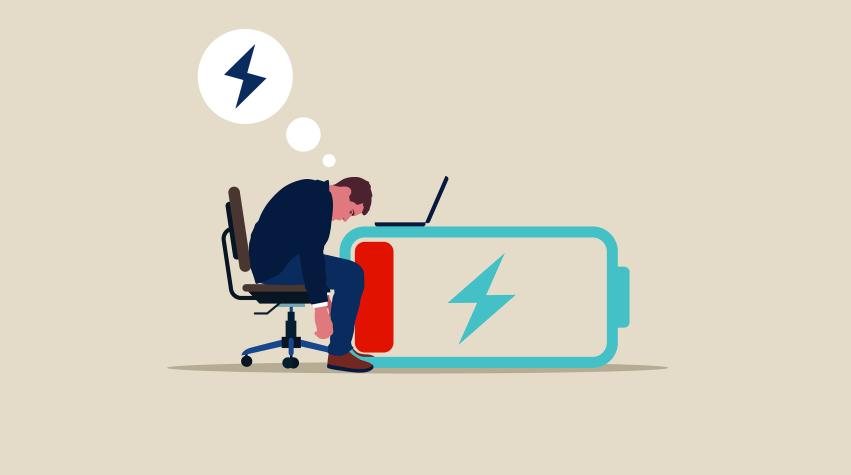
Burnout isn’t a bad week or a busy season. It’s an insidious cycle of chronic fatigue, exhaustion, and irritability that builds slowly, eroding physical, mental, and emotional capacity. Your sharp, capable self is still there, showing up and doing the work, but your focus scatters, thinking slows, and patience evaporates. Even small interruptions are unbearable.
STEM professionals are particularly vulnerable. Analytical reasoning, judgment, and critical thinking are your competitive edge, and burnout hits those first. STEM culture often normalizes overextension; long hours signal commitment, and high performers naturally absorb extra responsibility.
Most corporate advice on burnout is fluff. It treats it like a lifestyle problem: meditate more, hit the gym, see a therapist, or buy a planner. While there’s nothing wrong with this advice, it only works if you’re stressed or having a tough week, not when you’re in the throes of chronic stress and full-blown exhaustion. We’re going to cover five “less-is-more” strategies to give your brain and nervous system the space to recover.
Reduce background noise
Start by turning off non-essential notifications: Slack/Teams channels, email alerts, and meeting invites. Not every meeting requires real-time attention. Some things can be handled asynchronously through a Slack update, a recorded meeting, or an email summary. For recurring check-ins, consider sending a written update or joining only when your input is needed. Check emails in concentrated blocks rather than reacting in real time. Less noise frees mental bandwidth for deep work and prevents small distractions from snowballing into exhaustion.
Shrink your day
When you’re burnt out, 8–10-hour days feel impossible. Most people have a 2- to 3-hour peak performance window. Find yours and use it for high-value, deep-thinking work, like experimental design, data analysis, and modeling. Save lower-cognitive tasks, like email triage or administrative updates, for outside that window. Pick one meaningful deliverable each day. Completing it helps restore cognitive confidence without exhausting critical thinking.
Set strategic boundaries
Boundaries are the core of managing burnout. They protect not just your time but also the quality of your work, including the projects you take on. In high-pressure, performance-driven organizations, boundaries tied to outcomes travel further than those framed around emotion and wellness. The key is making the trade-offs visible. If you’re deep in two high-stakes projects and a third is proposed, instead of “I’m overwhelmed,” try: “I’m currently working on A and B. If I take on C, which should we prioritize?” This shifts the conversation from emotion to reprioritization, protecting focus and output.
Identify invisible labor
Burnout often hides in extra work that quietly drains energy: last-minute reviews, administrative updates, fixing others’ work, or after-hours messages. Ask yourself: Does this advance the project, improve quality, or support key decisions? Focus on 1–2 key deliverables, and handle lower-impact work outside your peak window or at just enough to meet requirements. Invisible labor can also appear in optional volunteering, like serving on a committee without being asked. These efforts often feel like proof of reliability, but when managing burnout, less is more.
Build in micro-recovery
Burnout recovery means resting your system, not adding intensity. Short breaks, like a 5–10-minute walk, sitting outside unplugged (no music, video, phone screen, etc.), or going to bed 10 minutes earlier, can help reset your nervous system. Simplify small decisions: eat the same breakfast or lunch, narrow your wardrobe to a few go-to outfits, or run errands in one trip.
Even with these strategies, burnout can be environmental. Understaffed teams, ongoing layoffs, impossible deadlines, leadership chaos, and constant firefighting can overwhelm even the best self-management strategies. In those cases, stabilize your immediate workload and bandwidth while quietly preparing an exit strategy: update your résumé, track opportunities, and reconnect with trusted contacts.
A final thought
Burnout happens to competent, conscientious people all the time, not because they’re weak but because they care. They solve hard problems, absorb extra work, and keep projects on track. Recognizing early signs — persistent exhaustion, irritability, detachment, loss of focus, or physical symptoms like headaches or muscle tension — lets you act before your brain and body decide for you.
This article originally appeared in the Career Connection column in the April 2026 issue of CEP. Members have access online to complete issues, including a vast, searchable archive of back-issues found at www.aiche.org/cep. Learn more about AIChE membership.