

Photo credit: Raphael Portilho
Disclosure: This post is sponsored by Vale and reflects their views, opinions, and insights.
Mining companies are under growing pressure to meet demand for critical minerals while making operations safer, more efficient, and more sustainable. These priorities are reflected throughout the program for the 11th Latin American Congress on Process Safety (LACPS), taking place September 30–October 2, in Lima, Peru.
Below, Vale shares how its Mining of the Future Program is responding to these demands by bringing together technology, circularity, and workforce development to create more predictable and resilient operations. At the center of this approach is a broader view of risk management, which strengthens process safety by transforming how operations are designed and managed.
Risk management is evolving
Mining is in the midst of a major transformation. Growing demand for critical minerals is colliding with the urgent need for safer, more efficient, and more sustainable operations. In this context, risk management must also evolve, taking on a strategic role in reshaping how we work.
Historically, industry has focused on identifying risks and implementing controls to prevent unwanted events. These fundamentals remain essential. However, the increasing complexity of operations demands a broader perspective: strengthening safety by transforming production systems themselves.
Rather than simply reacting to events, the challenge is to evolve operational processes, so they become more resilient, predictable, and less prone to failure.
Safety starts with the design of the operation
This vision expands the concept of process safety. Rather than treating technology, sustainability, people, and innovation as independent initiatives, these elements become part of an integrated operational transformation strategy.
At Vale, this vision shaped the Mining of the Future Program, which unites different transformation workstreams around a common objective: to promote operations that are increasingly prepared for the challenges of the future.
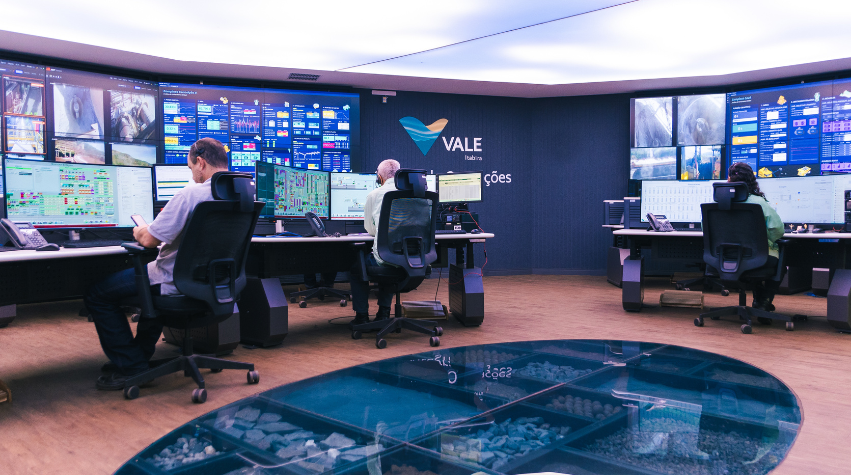
From a process safety perspective, what sets this approach apart is its focus on addressing the structural causes that make operations more susceptible to errors. By incorporating automation, artificial intelligence, and integrated operations centers, we enhance our ability to anticipate deviations, reduce process variability, and strengthen data-driven decision-making.
More predictable operations reduce risks
A significant share of operational incidents stems from the difficulty of anticipating deviations before they materialize.
In this context, digital technologies are no longer just a way to improve productivity, but also a tool to deepen our understanding of operational behavior, support decision-making, and reduce people’s exposure to risk.
Vale’s Model Plant embodies this evolution by integrating highly skilled people, processes, and technology into a data-driven operational environment. More than that, this initiative focuses on redesigning efficiency standards, increasing operational stability by creating an integrated process, improving the quality of decisions, and enhancing the reliability of the system as a whole.
Circularity also strengthens risk management
The mining sector’s transformation also hinges on optimizing mineral resources.
In 2025, Vale’s Circular Mining Program produced 26 million tonnes of iron ore from circular sources, demonstrating that reusing materials once destined for stockpiles or dams can help reduce the risks associated with these structures.
Beyond the numbers, this new approach to mining shows that circularity and risk management can advance hand in hand.
People remain at the center
No technological transformation delivers lasting results without people evolving alongside it.
Increasing digitalization demands new skills, stronger analytical capabilities, and even more collaborative environments. Preparing professionals to operate intelligent systems, interpret data, and work in an integrated way becomes just as critical as investing in new technologies.
In this context, workforce development is no longer just a talent management priority. It's an essential pillar of operational reliability and risk management.
The future of mining will be systemic
The real transformation underway lies in how we integrate processes that, until now, have evolved independently.
Vale’s experience reinforces that strengthening risk management is less about creating new controls and more about integrating production systems.
This is the essence of Mining of the Future: continuously evolving processes so that safer, more efficient, and more sustainable operations become an intrinsic outcome of an operating model in constant transformation.
Learn more and register for the 11th CCPS Latin American Conference on Process Safety.
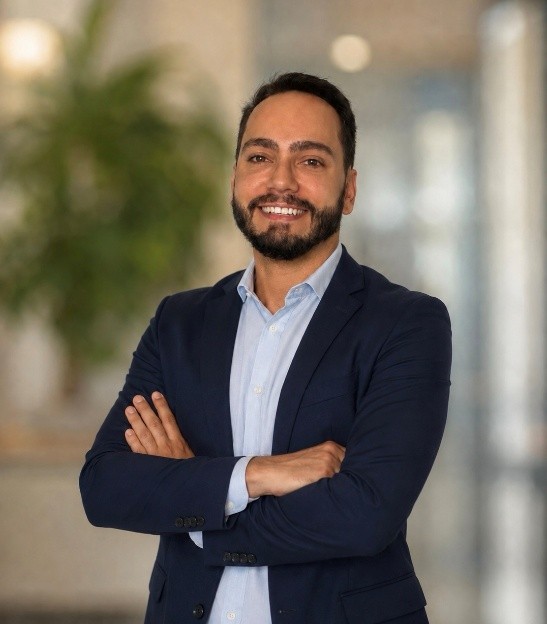
Lucas Cunha
Lucas Cunha is Senior Specialist Engineer and Value Realization Officer for the Mining of the Future Program at Vale.
Disclosure: This post is sponsored by Vale and reflects their views, opinions, and insights.