
Disclosure: This post is sponsored by Pluspetrol and reflects their views, opinions, and insights.
Process safety depends on everyday decisions about investments, facility integrity, operational changes, and startup readiness. Making those decisions responsibly requires technical knowledge, committed leadership, and teams that feel confident raising concerns.
These priorities align with the discussions at the 11th Latin American Congress on Process Safety (LACPS), taking place September 30–October 2, 2026, in Lima, Peru.
Below, Pluspetrol shares how process safety informs its business strategy, what difficult operational experiences teach leaders, and how artificial intelligence can strengthen risk management while preserving human judgment and responsibility.
What role does process safety play in Pluspetrol’s business strategy, and how is it reflected in the company’s operational decisions?
At Pluspetrol, process safety is an essential condition for developing sustainable operations and achieving our long-term objectives. It is not a system separate from the business; it is part of the way we manage it, evaluate investments, plan operations, and make decisions.
Our approach begins with understanding hazards, assessing risks, and ensuring that effective barriers are in place to prevent and mitigate unwanted events.
Making the right decisions means operating within safe limits, maintaining facility integrity, rigorously managing changes, verifying readiness before startup, and prioritizing actions based on their contribution to risk reduction.
Operations may have different technical, geographic, and regulatory characteristics, but the fundamental expectations remain the same: committed leadership, knowledge of hazards and risks, barrier management, asset integrity, competency assurance, operational discipline, management of change, contingency planning, and continuous learning.
Throughout your career, what experience or lesson has most influenced your view of operational safety?
The experiences that have most influenced my perspective are those where an operational decision had direct consequences for people and the organization. In those moments, you realize that safety isn’t a technical abstraction or a collection of procedures. It’s a human and leadership responsibility.
Those experiences taught me that after a serious event, the leader’s role has several dimensions. First, you must care for people and their families, support and stand by teams, understand what happened from a technical perspective, and ensure that any restart only occurs when safe conditions exist.
The most important lesson is this: no operational result can compensate for a major event, much less an injury or loss of life. I also learned that our responsibility in an incident begins with the immediate response. Then we must transform that pain and learning into concrete, lasting, and systemic changes to prevent recurrence.
It’s essential to maintain a sense of vulnerability. The absence of incidents doesn’t mean the absence of risk. Leaders must learn to be skeptical and look for weak signals before they become events.
A leader must listen to experts, build trust, and demonstrate consistency between what needs to be achieved and how it’s achieved. They must act calmly in the face of uncertainty and be prepared to receive information they may not want to hear. If the team is afraid to communicate a deviation, the organization loses one of its most valuable barriers.
How do you envision digitalization, artificial intelligence, and new technologies impacting operational risk management?
I envision a very significant impact, but we need to start with an essential principle. Our Operational Intelligence Program operates with a clear foundation: first we get our processes right, then we enhance them with artificial intelligence. We do not want to digitize errors or layer technology onto processes that still show variability, fragmentation, or unclear roles.
Our goal is to transform how we operate through more mature processes, more reliable data, and more agile decisions, enhanced by technology when there’s a concrete opportunity to reduce operational risk, improve efficiency, or generate sustainable value.
In risk management, these technologies can expand our ability to detect weak signals, connect information from different sources, identify anomalous patterns, anticipate deviations, and capture lessons learned.
AI agents can review unwanted events, spotting gaps in classification or severity to achieve greater consistency. But human validation can’t be delegated. It’s not something we automatically hand over to a model. That’s why I see AI as a capability that amplifies the knowledge and judgment of our teams.
What message would you share with the professionals attending LACPS 2026 in Lima?
My message would be that we should use this gathering to renew a shared conviction: major incidents are preventable. Prevention requires technical knowledge, discipline, leadership, and the humility to keep learning.
I’d invite attendees to share experiences openly, challenge complacency, and to take the conversations they have at the conference and apply them to their organizations' everyday decisions.
To young professionals beginning this journey, I’d recommend never losing your curiosity. Listen to operators, technicians, and specialists with field experience. Feel responsible for asking questions and raising concerns, even when you don’t yet have all the answers.
Finally, understand that process safety is cross-functional, not a specialty reserved for certain roles. Every design, operations, maintenance, or management decision can shift the level of risk.
Process safety is built when we see the risk, assume our responsibility, and act before it’s too late.
Learn more and register for the 11th CCPS Latin American Conference on Process Safety.
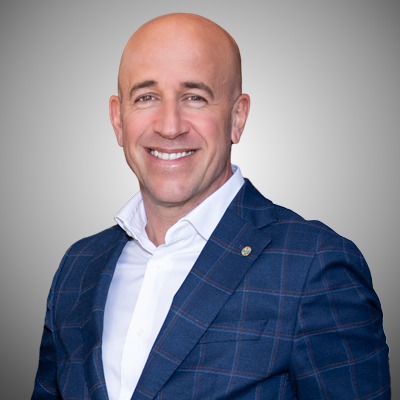
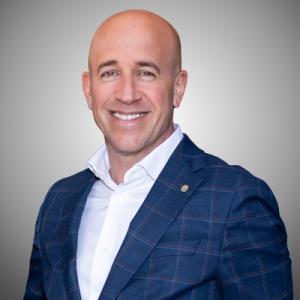
Germán Álvarez
Germán Álvarez is Vice President of Operations and Integrated Services at Pluspetrol Corporation. Learn more.
Disclosure: This post is sponsored by Pluspetrol and reflects their views, opinions, and insights.