As gene editing and RNA technologies converge, AIChE’s Society for Biological Engineering is launching a new conference designed to bring them together. We spoke with the GEAR chairs about the vision behind the meeting and the conversations they hope it will spark in Boston.
Synthetic biology is evolving fast. At SEED 2026, leaders from research and industry will explore how AI, bio-design, and new engineering platforms are transforming the future of biotechnology.
Meet the 2025 SBE award recipients — Daniel G. Anderson, Karmella A. Haynes, and Costas D. Maranas — and explore their groundbreaking research shaping the future of biological engineering.
Biomanufacturing is evolving with the help of automation, data integration, and high-throughput tools. In this post, Beckman Coulter Life Sciences shares how their technologies are helping researchers accelerate DBTL cycles, improve scalability, and support sustainability.
Hear from Richard Fox of Inscripta and Lauren Kinner of Kytopen on CRISPR trends, challenges, and new technology, including boosting throughput and improving scalability.
David discusses the work he’ll be sharing at the conference, trends in the CRISPR field, and how CRISPR can advance some of the grand challenges facing engineering and society today.
Hear from Andreas Möglich of the Univ. of Bayreuth, Germany, about his research and the areas where he sees significant future developments in optogenetics.
Richard Fox discusses overcoming barriers to progress in synthetic biology and biomanufacturing, looks at where the next wave of innovation will come from, and more.
Learn about this researcher’s focus on the transformative potential of RNA, and learn how he thinks it will help solve some of engineering and society’s challenges.
Learn how this researcher got involved in mammalian synthetic biology, where she sees its greatest potential, and what advice she has for those new to the field.
Find out how Leproust entered the field of synthetic biology and learn more about the areas where she sees the greatest potential for improving human lives.
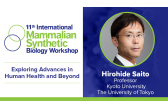
Understand how this researcher found his way into mammalian synthetic biology, hear his advice for entering the field, and learn where he thinks the most promising applications lie.
In May, AIChE celebrates Asian American and Pacific Islander Heritage Month by highlighting the voices, experiences, and contributions of AAPI engineers across academia, industry, and research.
The rank of Fellow is AIChE’s highest grade of membership and is achieved only through election by the Board of Directors. Candidates for AIChE Fellow are nominated by their peers and must have significant chemical engineering experience (generally 25 years), have demonstrated significant service to the profession, and have been a member of AIChE for at least 10 years.
With a bit of smoke, a few mirrors and a degree in hieroglyphics, anyone can learn to read a P&ID. Piping and instrumentation diagrams is a topic that can benefit process, project and design engineers, business developers, operators, safety, maintenance and even management.
Check out AIChE's newest member benefit, AIChE Engage. Use the
robust directory search to find and connect with members.
Participate in technical, career, and academic discussions about
chemical engineering.