
A few months ago, Amazon announced that it is in the process of developing smart artificial intelligence (AI)-powered augmented reality (AR) glasses for its delivery associates (1). The goal of this new technology is to help improve last-mile customer deliveries by aiding in navigation, package identification, and hazard detection right in front of their eyes, reducing the need for workers to constantly check their phones for information. By streamlining this process, smart glasses ensure the worker’s safety while enhancing efficiency.
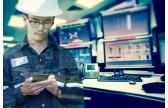
Likewise, the convergence of AI, AR, and wearable technology has created a powerful new tool for chemical engineers and plant operators. These devices overlay digital information on the physical world, providing workers with instant access to data, remote expertise, and predictive insights precisely when and where they’re needed. In an industry where a single oversight can cascade into a mishap — where even the smallest temperature deviations or pressure changes can mean the difference between normal operation and a process safety incident — the ability to see beyond what the naked eye perceives represents a major shift in process safety management.
Addressing safety challenges
Chemical manufacturing environments present a uniquely complex array of hazards. Traditional safety approaches rely heavily on training, procedures, and human vigilance. Yet when working in demanding, high-stress environments, humans may forget critical details, misread gauges under poor lighting, make errors when troubleshooting, and struggle to maintain situational awareness across dozens of simultaneous processes and competing alarms. Most critically, workers often lack immediate access to the specific information needed to make safe decisions under time constraints.
Smart glasses address several fundamental safety challenges. First, they combat information fragmentation. Critical data resides in disparate systems — such as distributed control systems, maintenance records in a database, standard operating procedures in binders, and expert knowledge in the heads of veteran operators. Workers must mentally review this information while simultaneously managing physical tasks. Smart glasses can aggregate and present this information contextually, reducing cognitive load and minimizing errors. In addition, they mitigate hazards associated with divided attention. When operators must consult tablets, paper documents, or return to control stations to access information, they divert attention from the task at hand. Hands-free, heads-up displays keep workers focused on their immediate environment while providing needed data.
Smart glasses enhance hazard recognition. Many anomalies — such as vibrations in rotating machinery, corroded piping, and leaking equipment — develop gradually and may sometimes remain imperceptible until they cause an incident. AI-enabled glasses connected to plant sensor networks can detect pattern deviations that signal developing problems and alert workers before hazards become critical.
When a complex problem emerges, especially during off-shifts or at remote facilities, having immediate access to experienced engineers becomes crucial. Smart glasses also enable remote experts to see exactly what the on-site worker sees, provide real-time guidance, and even annotate the worker’s visual field with directions, essentially lending their expertise through digital presence.
Practical applications in the plant
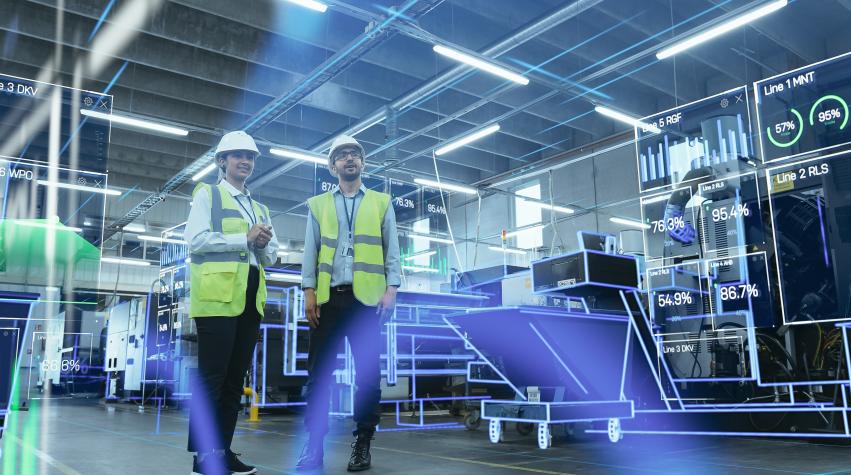
Smart glasses have the potential to transform chemical engineering operations, spanning routine maintenance to emergency response. In maintenance operations, technicians can use smart glasses to access equipment schematics, maintenance histories, and step-by-step repair procedures without putting down tools or leaving the workspace. During lockout-tagout procedures, smart glasses can overlay visual confirmation checklists, ensuring workers verify each isolation point in the correct sequence. In process optimization and troubleshooting, engineers can visualize material flows and energy data directly on the plant floor, enabling faster diagnosis and response.
During emergencies, smart glasses may become even more valuable. By wearing the facility’s smart glasses, first responders can have access to building layouts, chemical inventories, and emergency procedures while keeping their hands free for rescue operations. Thermal imaging can help locate personnel in smoke-filled areas, while gas detection overlays can show contaminated zones. Remote incident commanders can see what responders see, making better tactical decisions without requiring detailed radio descriptions from personnel operating under extreme stress.
Embracing the technology
BASF, one of the largest chemical manufacturers, has emerged as a pioneer in smart glasses deployment. The company has adopted Microsoft HoloLens devices at its Ludwigshafen site, using them primarily for remote assistance and maintenance operations (Figure 1). By integrating the glasses with the Hololight Space software, process design engineers are able to visualize and manipulate complex CAD data as holograms for plant expansion projects (2). By overlaying digital twins onto the real-world environment, teams can instantly verify design compatibility, run test scenarios, and identify deviations right then and there.
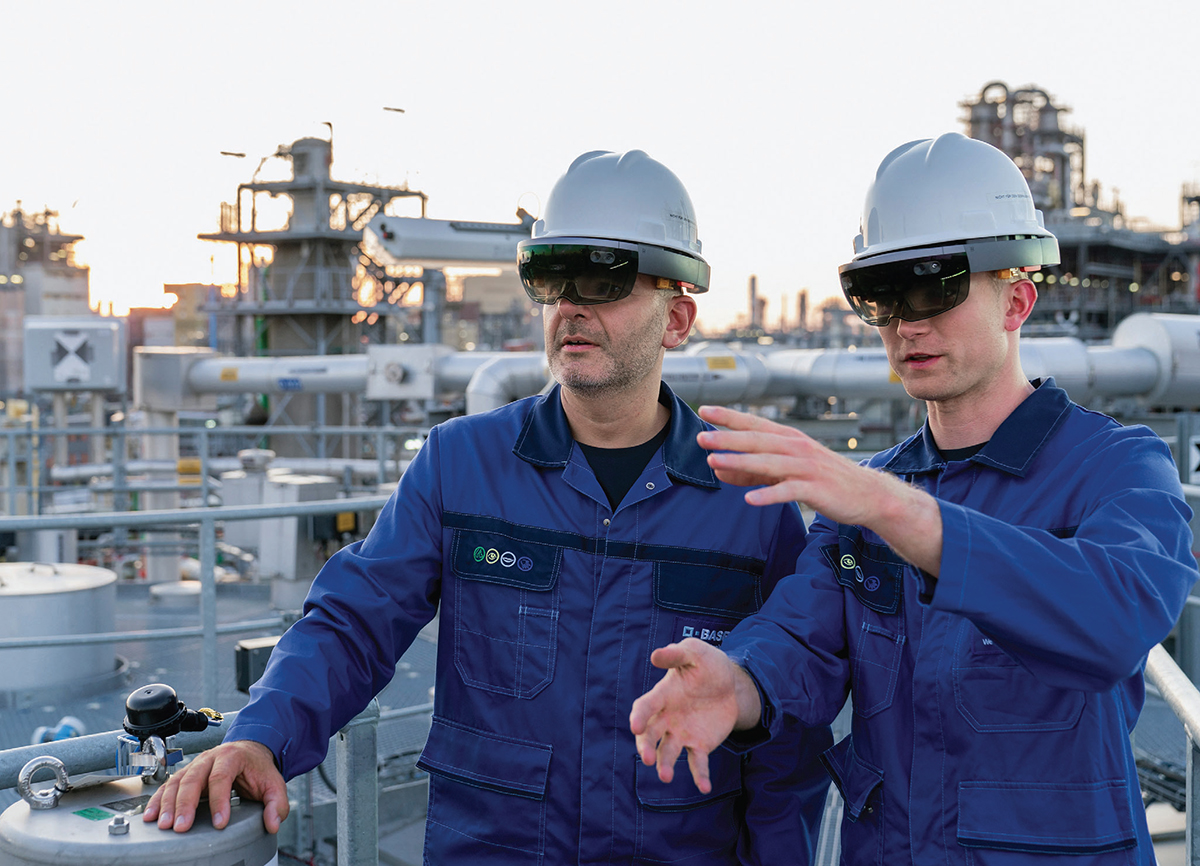
Shell has similarly deployed smart glasses along with other AR technologies across its refining and chemical operations (3). On the field, workers can connect to expert technicians via a video call for assistance. The technicians are then able to “draw” on their display to provide notes and further guidance. Shell also has been utilizing virtual reality (VR) technology to train staff on equipment operation — using a transparent view feature that allows them to look inside equipment — and on how to respond during extreme events.
Looking ahead
The integration of AI-powered smart glasses into chemical plant operations represents a leap forward in how humans interact with complex, hazardous industrial systems. By enhancing perception, democratizing expertise, and enabling seamless information flow between digital systems and physical operations, these devices address longstanding safety challenges.
As the technology matures, we can expect even deeper integration. Future systems will likely incorporate predictive maintenance algorithms that not only identify developing problems but automatically schedule repairs and order parts. Advanced AI may be able to provide real-time coaching for complex procedures, essentially creating a virtual assistant available to every worker, regardless of experience level, while improved battery life, comfort, and display quality will drive broader adoption across all plant roles.
Smart glasses are the latest tool in the chemical industry’s long history of innovation, helping chemical engineers and operators see not just what is, but what could go wrong, and what to do about it.
- Amazon, “Amazon’s Delivery Glasses: The Newest Innovation Designed to Enhance the Delivery Experience,” https://www.aboutamazon.com/news/transportation/smart-glasses-amazon-delivery-drivers (Oct. 22, 2025).
- “BASF Plans Factories in AR,” Hololight, https://hololight.com/news/basf-plans-factories-in-ar (Feb. 18, 2021).
- “Augmented Reality (AR) and Virtual Reality (VR),” Shell, https://www.shell.com/what-we-do/digitalisation/ar-vr.html (accessed Nov. 24, 2025).
Learn more about Predictive, Prescriptive, and Generative AI
This article originally appeared in the January 2026 issue of CEP. Members have access online to complete issues, including a vast, searchable archive of back-issues found at www.aiche.org/cep. Learn more about AIChE membership.