
Disclosure: This post is sponsored by DataHow and reflects their views, opinions, and insights.
As artificial intelligence and digital tools continue to reshape pharmaceutical development, one of the biggest challenges is turning that momentum into practical, scalable impact in the lab. These conversations are taking center stage at the upcoming PD2M AI for Pharma Conference, taking place May 5–6, 2026, in Cambridge, MA, where industry leaders are exploring how data-driven approaches are changing the way bioprocesses are developed and optimized.
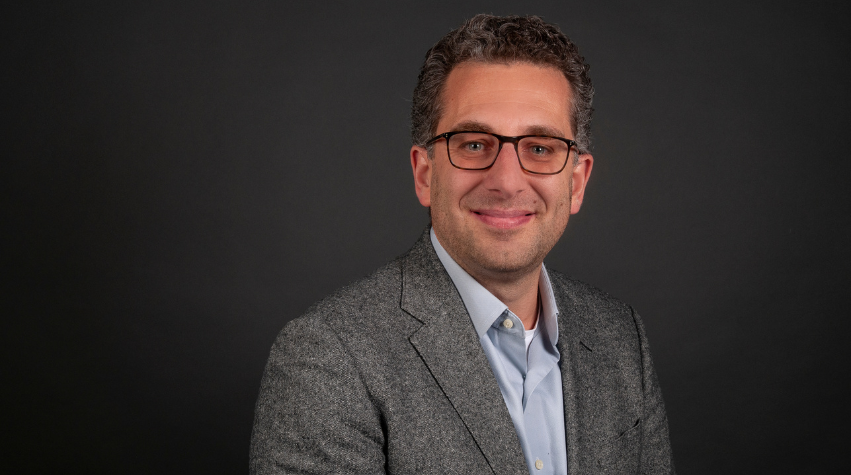
Among them is Alessandro Butté, CEO of DataHow, an ETH Zurich spinout focused on applying AI and data-driven approaches to bioprocess development. Via its DataHowLab platform, the company helps scientists shift from experiment-heavy workflows to efficient, model-based approaches.
In this interview, Butté discusses what's driving digital transformation in bioprocessing, how hybrid modeling is evolving beyond conventional AI, and what it will take for industry-wide adoption of data-driven decision-making.
It feels like there's tangible momentum behind digital transformation in bioprocessing. What's driving that shift?
Economic pressure is a major driver. CMC development costs between $23 and $56 million per drug, but the real cost per successful drug reaches roughly $150 million in NPV terms when accounting for attrition. Much of that spend goes to wet lab work that's historically been difficult to shortcut without sacrificing process understanding. What's changed is that technologies and digital infrastructures have matured enough that early adopters are confidently shifting toward efficient, model-based approaches powered by data-driven intelligence.
Model-based process intelligence—are we talking AI?
AI is part of the story, but the term can be misleading here. I believe hybrid models are the best fit for bioprocessing. They combine a deep mechanistic understanding of biological processes with machine learning. Rather than treating the bioprocess as a black box, we embed what science already tells us—about cell growth, nutrient consumption, and product formation—directly into the model. The machine learning component then learns what we lack in scientific understanding from available data. This represents an evolution: from AI 1.0, where data quantity and quality were paramount, to AI 2.0, where existing knowledge and intelligence drive outcomes.
The technology performs well with limited data, can be interrogated by scientists, and is explainable to regulators. In practice, some development teams have cut experimental runs by 40% or more using hybrid-model-based approaches compared to traditional Design of Experiments (DOE) black-box models. They also enable powerful digital capabilities like process simulation and the ability to transfer knowledge and insight across molecules and scales.
Biopharma development happens under intense regulatory scrutiny. How do model-centric approaches hold up when it comes time to talk to regulators?
Regulators are more receptive than many assume. Guidelines like ICH Q8 and Q11 encourage Quality by Design—building deep process understanding rather than relying purely on empirical data. Model-based development aligns squarely with that philosophy. The critical factor is interpretability: hybrid models capture knowledge and uncertainty in ways regulators need to assess risk. The risk isn't in using models to replace redundant wet-lab work; it's in using opaque ones. Platforms designed with audit trails, validation workflows, and structured documentation make this practical in regulated environments. Early success stories in in silico process characterization and advanced modeling solutions used for regulatory filing are reassuring.
It sounds like hard skills in data science and modeling are going to be a must for bioprocess scientists to stay relevant. Would you agree?
Not quite. The assumption is understandable, but it sends scientists and organizations in the wrong direction. Expecting every process scientist to retrain as a data scientist is unrealistic at scale, and unnecessary. Our philosophy at DataHow is almost the inverse: the platform should come to the scientist. That means embedding model-based intelligence into the questions scientists already ask. What experiments should I run? What can I learn from this data? What should I change? The goal isn't to build models, it's to understand what to do next, based on all available knowledge and process goals. Modeling is simply an enabler, a sparring partner to help understand complex processes.
What's still holding the industry back from embracing these approaches more broadly?
Cultural inertia is a real challenge. In organizations with established development processes, "we've always done it this way" is a powerful force. Change is difficult, and some organizations are more risk-averse than others, preferring the status quo over uncertainty. I don't believe this is a winning strategy.
Data readiness is a genuine barrier: many organizations still struggle with siloed, inconsistent process data, and no model can compensate for that. But organizations that invested early in these directions—who tried new approaches and committed resources to digital solutions—are now seeing the return on those investments. In the next 5 years, we expect huge ROI from these initiatives in process development and manufacturing, with many organizations operating very differently than they do today.
Disclosure: This post is sponsored by DataHow and reflects their views, opinions, and insights.