
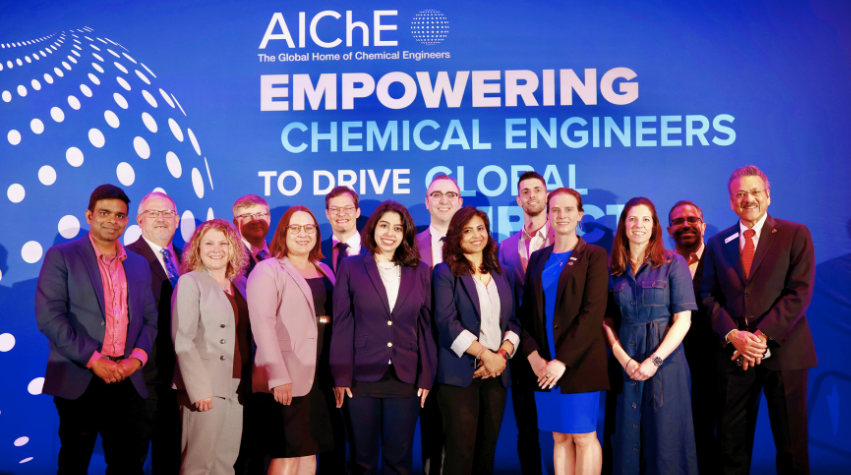
The 22nd GCPS Organizing Committee
With hundreds of presentations spanning all aspects of process safety, the 22nd Global Congress on Process Safety (GCPS) offered practical insights for every type of engineer. Subject matter experts shared actionable advice on human factors, AI in process safety, emergency planning and response, and more. Still, with so many talks diving into granular details, it helps to take a step back. Here are five broader takeaways from this year's GCPS.
There is no such thing as a near-miss; only near-hits
Process safety engineers take their work seriously. To emphasize this, they often challenge how incorrect assumptions about safety get baked into everyday language. One of the most helpful phrases you might pick up from GCPS is "near-hit."
In conventional language, if something in a process almost goes wrong but nothing happens, we call it a near-miss. However, focusing on how the process avoided an incident can hide how close it came to disaster. Calling these situations near-hits refocuses the discussion on eliminating the hazard in the future. Process safety experts warn that the luck implicit in the phrase "near-miss" can tacitly encourage engineers to avoid taking steps toward safer processes.
Safety doesn't end at the plant's property line
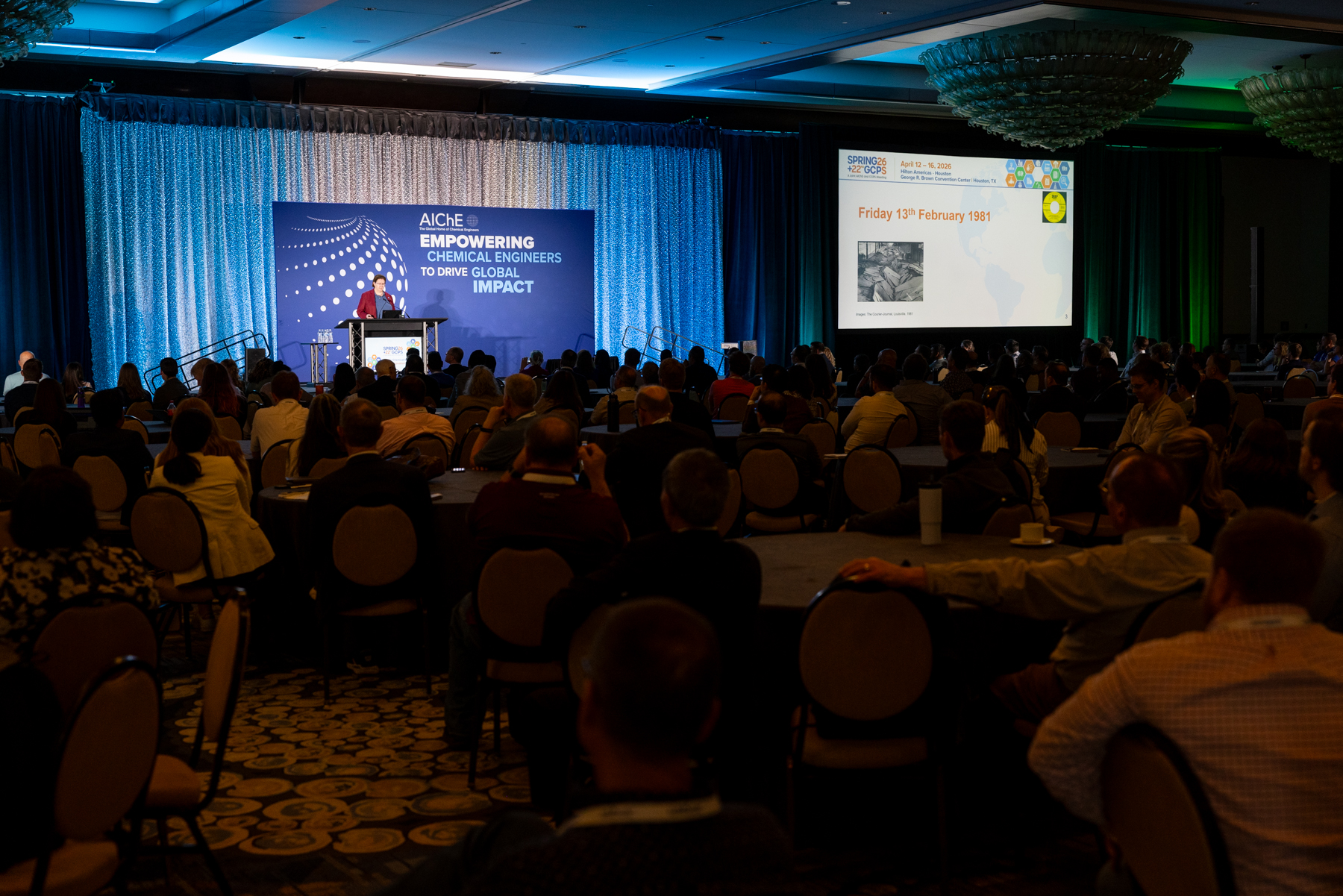
One of GCPS's most well-attended talks was titled "Where Were You When the Sewer Blew," a case study covering the catastrophic 1981 Louisville sewer explosion. To a packed room, process safety expert Trish Kerin recounted how a massive hexane leak from a soybean processing facility led to a sewer explosion that destroyed multiple miles of city streets, homes, and businesses.
With many GCPS talks focusing on on-site process safety specifics, case studies like these push engineers to broaden their view of what process safety should accomplish. While keeping personnel safe is critical, it's equally important to recognize that the consequences of poor process safety often devastate nearby communities.
Human error cannot be easily predicted
Human error continues to resist prediction, despite decades of effort to quantify it. In the session “Human Performance – Learning from Incidents,” speakers revisited methods like THERP (Technique for Human Error Rate Prediction) and emphasized that estimating error probability still relies heavily on expert judgment. The challenge is not a lack of data, but the complexity of factors that shape performance.
Chemical loading and unloading operations are among the most human-dependent interfaces in process facilities. The session “Driving Down Error: Case Studies and Tools for Reducing Human Error in Truck Driver Loading and Unloading Operations” offered practical guidance for managing these risks, highlighting the importance of both day-to-day oversight and well-defined operating procedures.
Aligning process safety with leadership priorities remains a persistent challenge
The 60th Loss Prevention Symposium (LPS) Celebration Session offered a high-level look at how the discipline has evolved. Across six rapid-fire talks, speakers traced 60 years of progress in explosions, dispersion, reactivity, risk assessment, and safety communication.
J. Kelly Thomas highlighted how major incidents drove advances beyond early TNT-equivalency models toward more accurate methodologies for vapor cloud explosions (VCEs), while noting their behavior is still not fully understood. Tom Spicer reinforced this with examples like dense gas releases (e.g., Bhopal), which challenged assumptions and led to more sophisticated dispersion models.
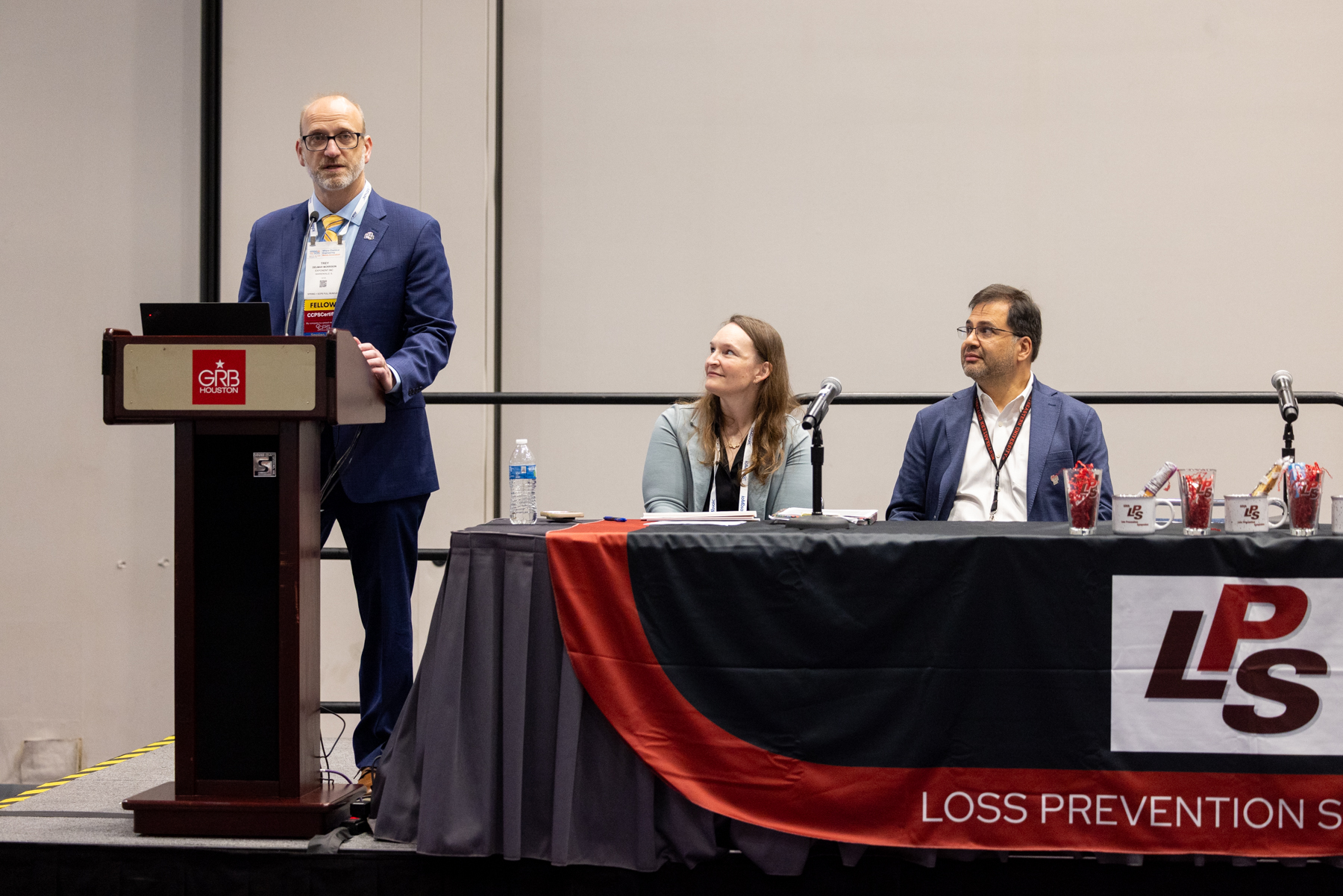
Trey Morrison pointed out that it can take two to ten years for incidents to be fully analyzed and shared, even as similar reactivity-related accidents continue. Cheryl Grounds emphasized that despite technical progress, aligning process safety with leadership priorities remains an ongoing challenge.
The takeaway is clear: progress in loss prevention has been iterative, incident-driven, and shaped by people.
No process safety incidents is the goal; planning for the unexpected is a must
Many of the incidents discussed at GCPS did not stem from the failure points process engineers anticipated. While some are caused by expected issues like instrument malfunctions or process deviations, others trace back to variables no one saw coming. An operator may arrive fatigued. A supplier may deliver lower-quality feedstock. Much of the work process engineers do comes down to expecting the unexpected.
AIChE's Center for Chemical Process Safety's (CCPS's) vision is “A World Without Process Safety Incidents.” Achieving that starts with designing systems that can handle the unexpected. Operations should be intuitive and reduce confusion, with multiple safety layers to prevent single points of failure from escalating. It also requires clear, well-communicated emergency and evacuation plans. Despite advances in technology, process safety still depends on the people who design and operate these systems.
What were your biggest takeaways from the 2026 Spring Meeting and 22nd GCPS? Comment below!